 EN
EN
- Overview
- Recommended Products
- Low-power drying design with total machine power stated as 9.7 kW.
- Three-stage drying structure: air-knife dewatering, brush drying and conveyor-roller drying.
- Air-knife stage removes about 80% of larger water droplets from the egg surface, according to the supplied description.
- Soft-brush drying helps disperse surface water droplets gently while fan airflow assists moisture removal.
- Conveyor-roller drying reduces residual water on rollers and lowers the chance of rewetting after drying.
- Supplementary hot-air drying can be enabled in humid or high-moisture environments when required.
- Duck egg cleaning before sorting or grading.
- Duck egg processing workshops needing integrated drying.
- Projects where lower drying power consumption is a concern.
- Facilities operating in seasonal or humid conditions that may require supplementary hot-air drying.
- Lines requiring six-row throughput and clear operator visibility.
Integrated Duck Egg Cleaning Line with Multi-Stage Drying
This duck egg cleaning system combines six-row water loading, six-row brush washing, LED light inspection and a multi-stage drying section. It is designed for duck egg processing projects that need stable cleaning performance and improved surface drying before the next handling step.
Nominal throughput stated in the supplied product title and supporting images.
Low-power drying design stated in the supplied product description.
Six-row loading, cleaning and candling layout from the supplied configuration.
Loading, washing, LED candling, and multi-stage drying.
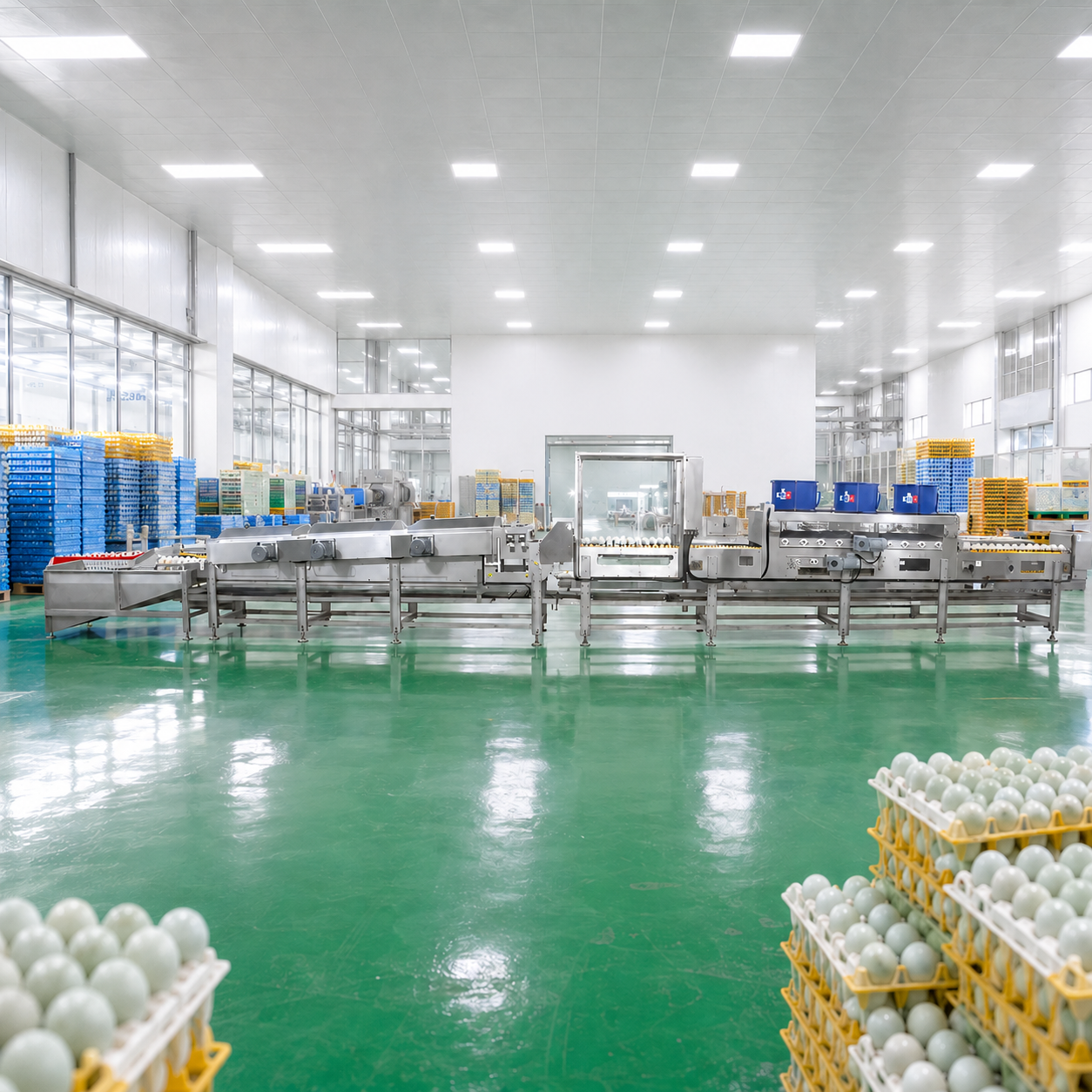
Cleaning and Drying in One Practical Line
Based on the supplied materials, this model is positioned as a duck egg cleaning and drying system rather than a full packing line. The line emphasizes gentle transfer, visible inspection and staged drying to reduce surface moisture before downstream handling.
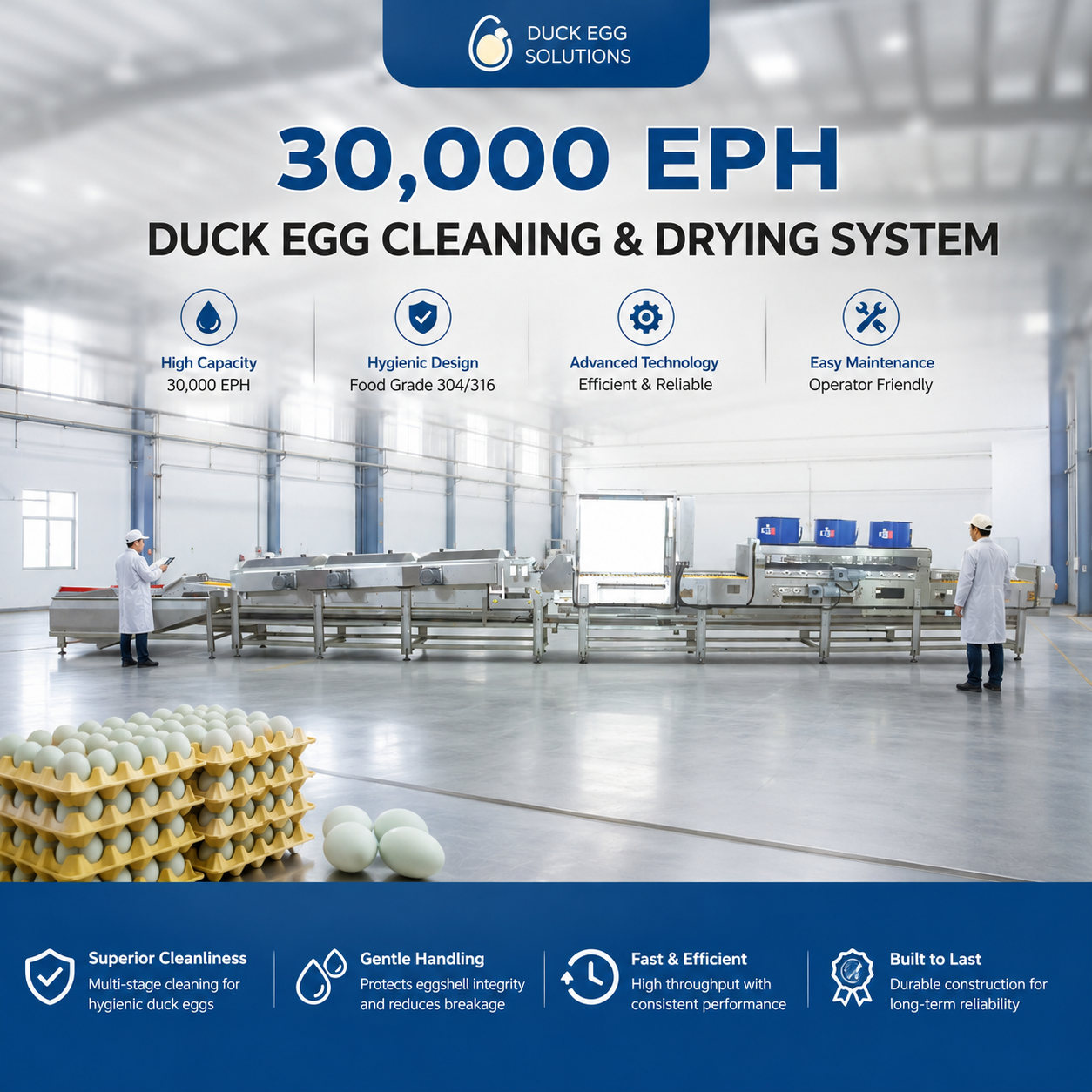
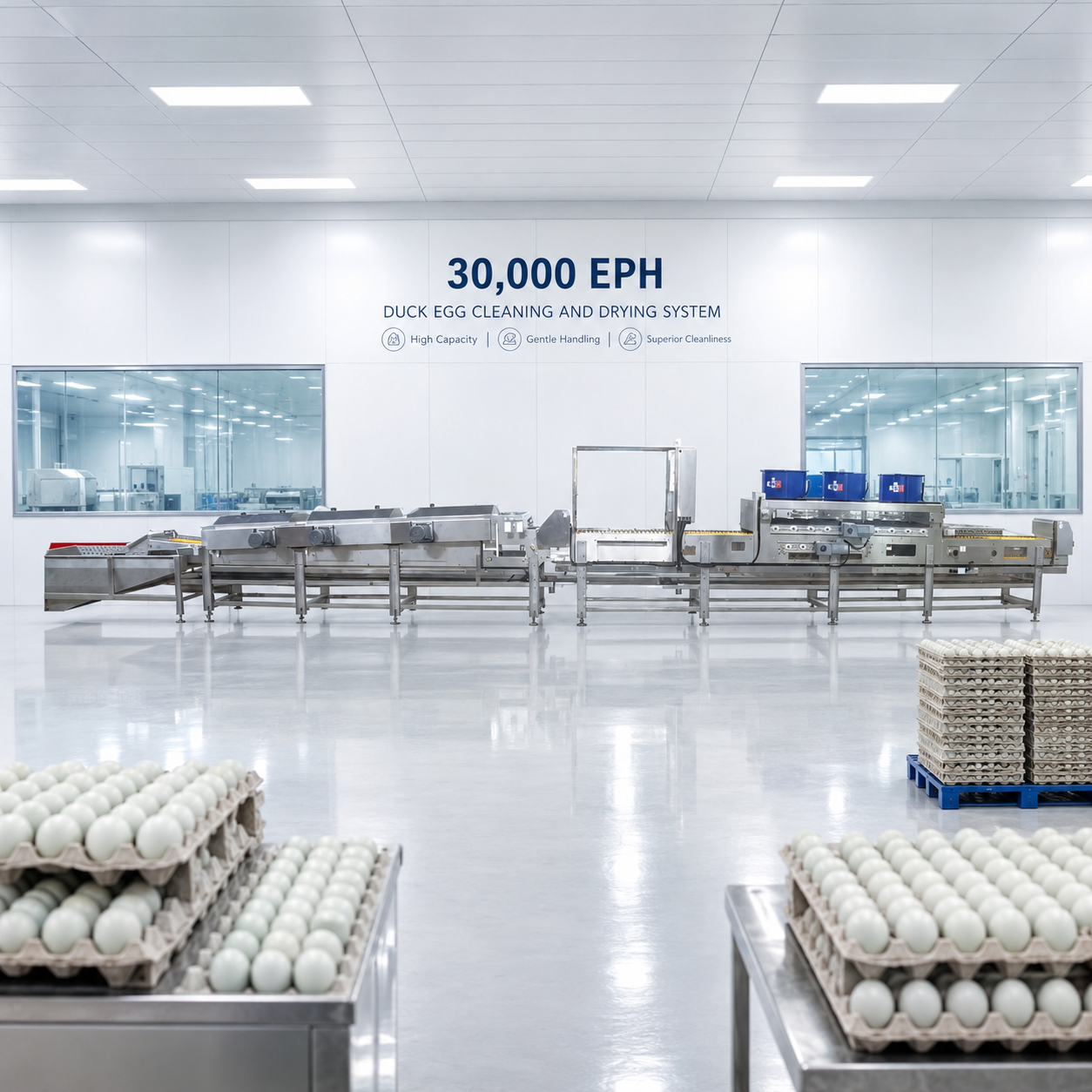
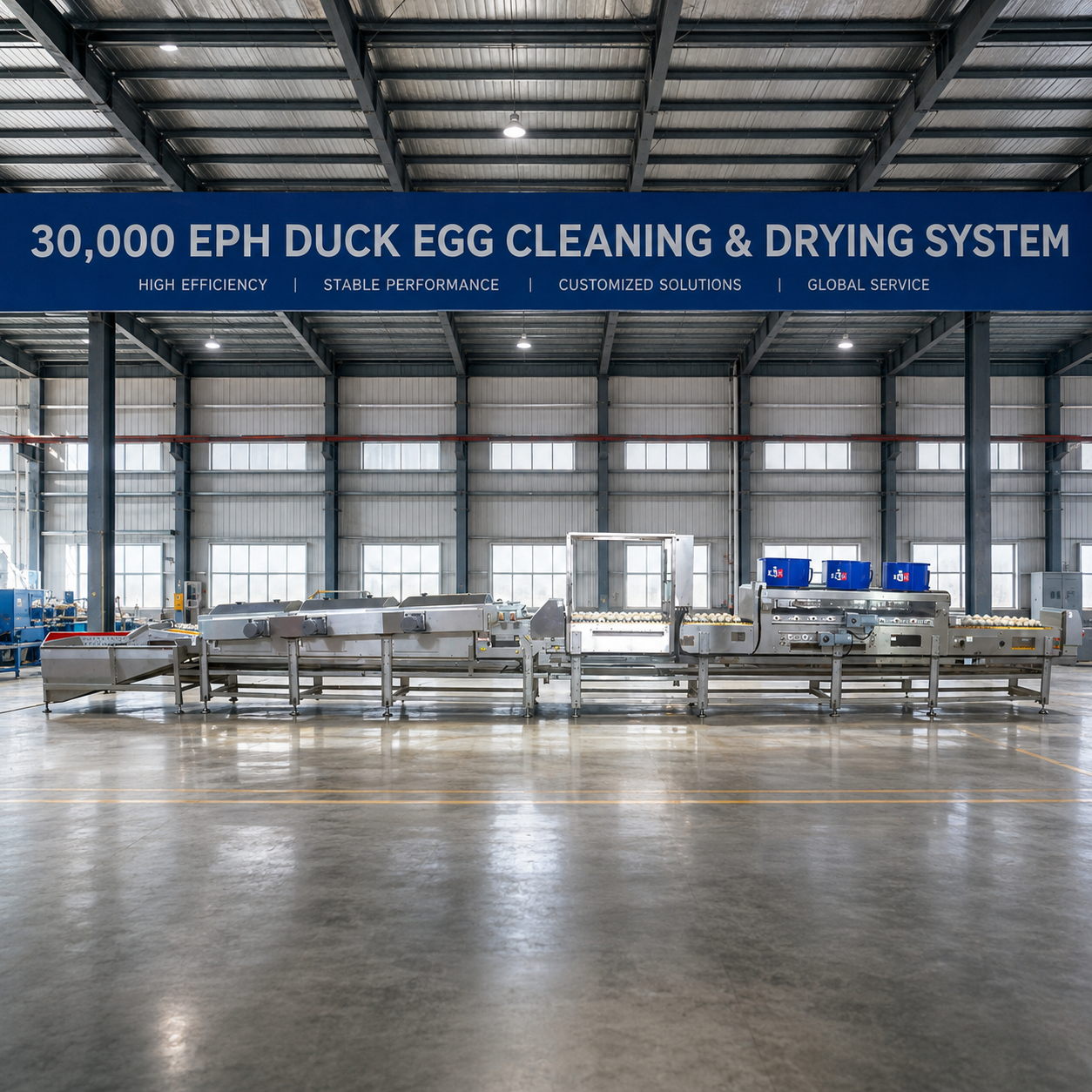
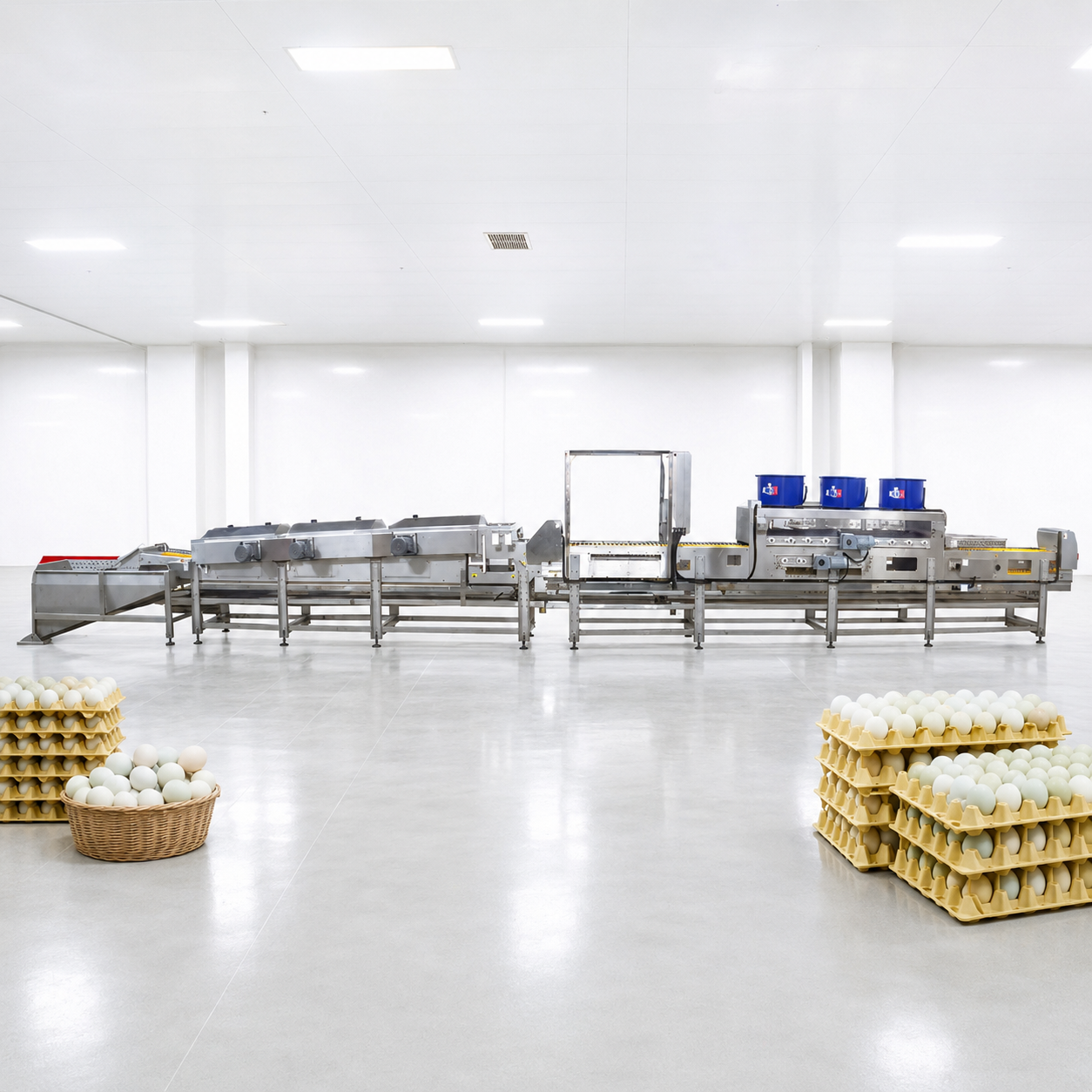
4 Main Equipment Sections
The supplied product data confirms the following four functional sections. Final auxiliary options can be adjusted according to the actual project process.
Six-Row Water Loading Tank
Supports full-tray egg loading and high-pressure spray at the inlet section.
Six-Row Cleaning Machine
Brush washing is used to clean the duck egg surface in a six-row processing layout.
Six-Row LED Candling
LED light inspection provides a visible candling stage for checking eggs during transfer.
Multi-Stage Drying System
Three-stage drying with air-knife water removal, brush drying and roller drying.
Focused on Lower Energy Use and Better Drying Results
The supplied product introduction highlights a 9.7 kW low-power drying design and a three-stage drying structure. Instead of making exaggerated drying claims, this page uses the original function descriptions to explain how each stage contributes to the overall result.
How the Multi-Stage Drying Section Works
Each stage is intended to remove moisture progressively rather than relying on one single drying action.
Air-Knife Dewatering
Used first to remove most of the larger water droplets from the egg surface before brush contact.
Soft-Brush Drying
Soft brushes gently break up the remaining surface droplets while airflow helps disperse smaller water particles.
Conveyor-Roller Drying
Provides additional drying support and helps reduce water residue on rollers to minimize secondary wetting.
Optional Hot-Air Support
For high-humidity or seasonal production conditions, supplementary warm-air drying can be enabled to improve final surface dryness.
Suitable for Duck Egg Cleaning Before Further Handling
This system is appropriate for duck egg processing lines that need a dedicated cleaning and drying stage before further sorting, grading, packaging or processing. Final process matching depends on egg condition, hygiene requirements and downstream equipment.
Need a 30,000 EPH Duck Egg Cleaning & Drying Layout?
Share your hourly capacity target, egg type, workshop dimensions, local power standard, humidity conditions and downstream process plan. GREAT FARM can recommend a practical line configuration based on the actual production requirement.
Confirmed Parameters & Scope
The following data table only uses information directly supported by your supplied materials and avoids adding unverified specifications.
| Product Name | 30,000 EPH Duck Egg Cleaning & Drying System |
|---|---|
| Egg Type | Duck eggs |
| Nominal Throughput | 30,000 eggs/hour |
| Total Power | 9.7 kW, as stated in the supplied product introduction |
| Loading Section | Six-row water loading tank, full-tray egg loading, with high-pressure spray |
| Cleaning Section | Six-row duck egg cleaning machine with brush washing |
| Inspection Section | Six-row LED light inspection / candling machine |
| Drying Section | Three-stage drying: air-knife dewatering, brush drying, conveyor-roller drying; supplementary hot-air drying can be enabled in humid conditions |
| Material | Stainless-steel machine body is shown in the supplied materials; exact stainless grade should be confirmed in the final quotation if required |
| Project Notes | Voltage, overall dimensions, compressed-air requirement and detailed control configuration are not provided in the current material and should be confirmed project by project |
Frequently Asked Questions
Common questions buyers may ask before selecting this duck egg cleaning and drying system.
1. What is the capacity of this system?
The supplied product information identifies this model as a 30,000 eggs/hour duck egg cleaning and drying system.
2. What functions are included as standard?
The supplied configuration includes a six-row water loading tank, six-row brush cleaning machine, six-row LED candling machine and a multi-stage drying system.
3. What is the total installed power?
The product introduction states a low-power drying design with total machine power of 9.7 kW.
4. How does the drying section work?
The drying section uses three stages: air-knife dewatering, brush drying and conveyor-roller drying. Supplementary hot-air drying can be enabled when the production environment is humid.
5. Does the air-knife remove all surface water?
No. The supplied description states that the air-knife can remove about 80% of larger water droplets. The remaining moisture is addressed by the subsequent brush and roller drying stages.
6. Is this system suitable for humid environments?
Yes, the supplied description states that supplementary hot-air drying can be used in humid or high-moisture environments to better dry the egg surface.
7. What should be confirmed before ordering?
Please confirm your egg type, target capacity, workshop layout, local power standard, ambient humidity conditions, and whether any downstream grading, packing or other equipment needs to be connected.