EN
Module 01
Heat Recovery System
Recovers heat during milk cooling and transfers it to water for washing and other farm uses.


A practical green-energy solution for dairy and cattle farms, integrating heat recovery, biogas utilization, photovoltaic power generation and wind power according to the real site condition.
Cattle farms continuously consume power, hot water and utility energy for milking, washing, ventilation, lighting and daily operation. A renewable energy system can help improve overall energy efficiency and make better use of on-farm resources such as milk heat, manure and available roof space.
Recovers heat during milk cooling and transfers it to water for washing and other farm uses.
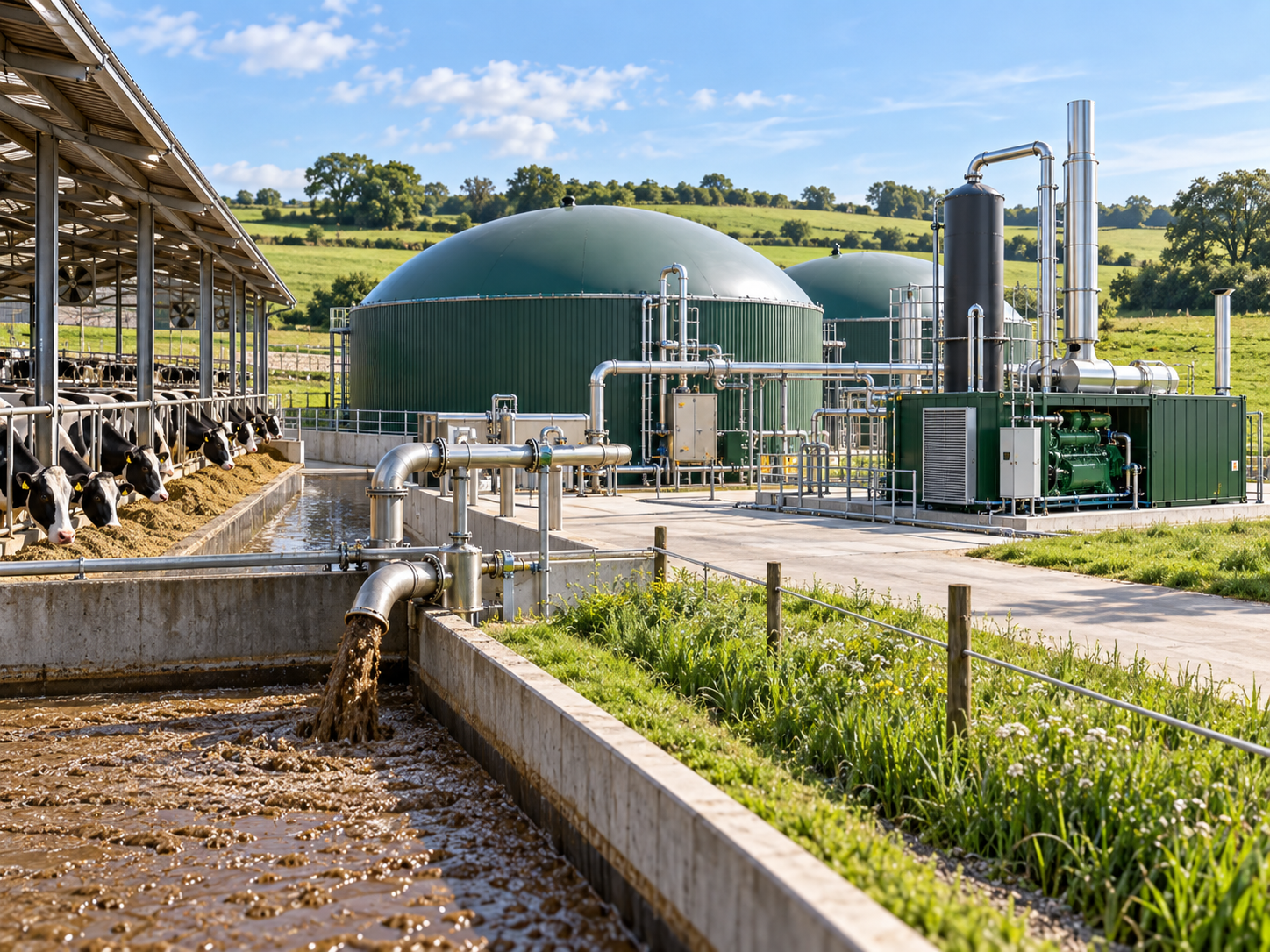
Uses manure and organic waste for anaerobic digestion to produce gas, electricity, heat and digestate.
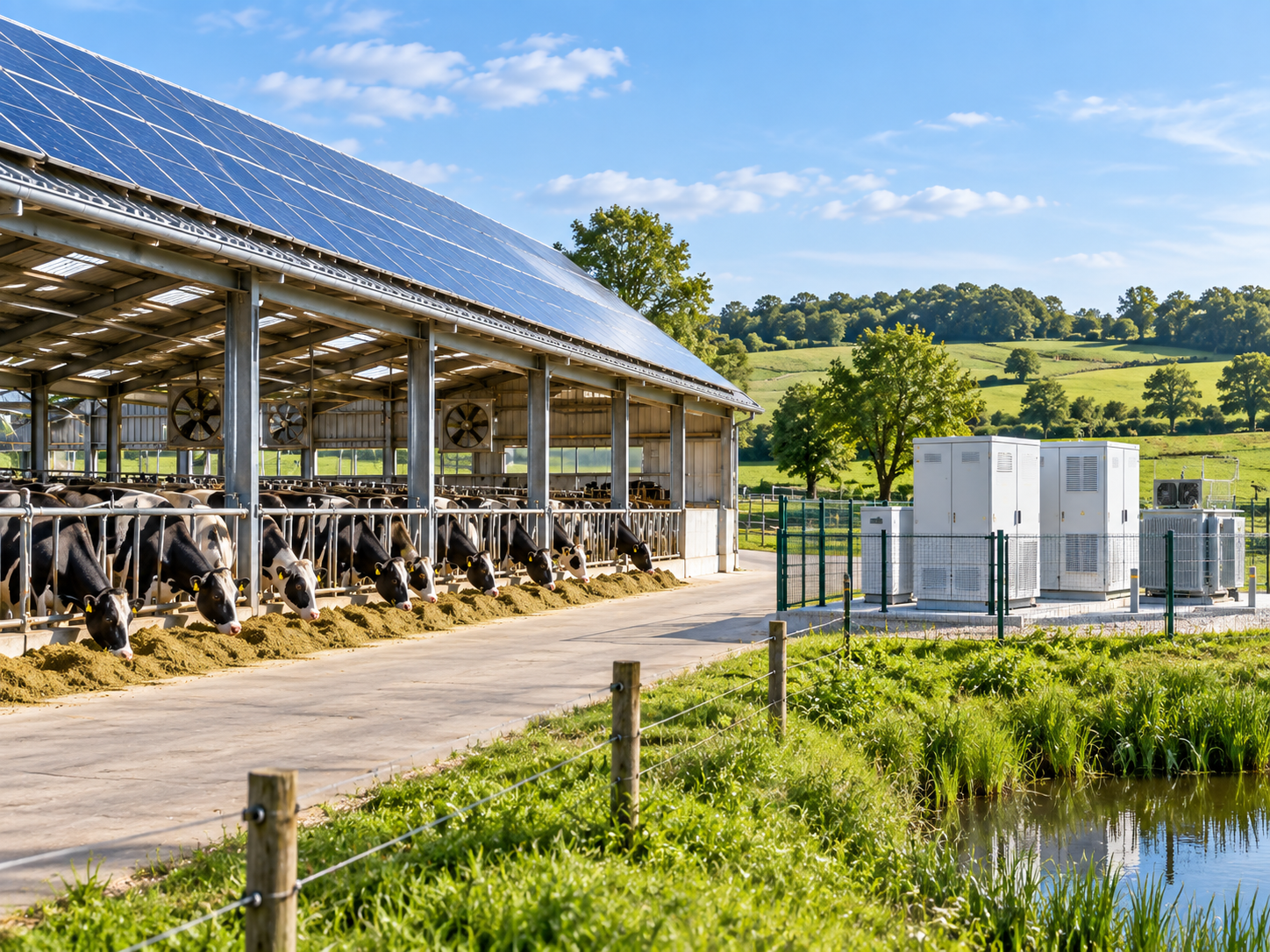
Uses roof or building-integrated solar power to supply part of the farm's daily electricity demand.
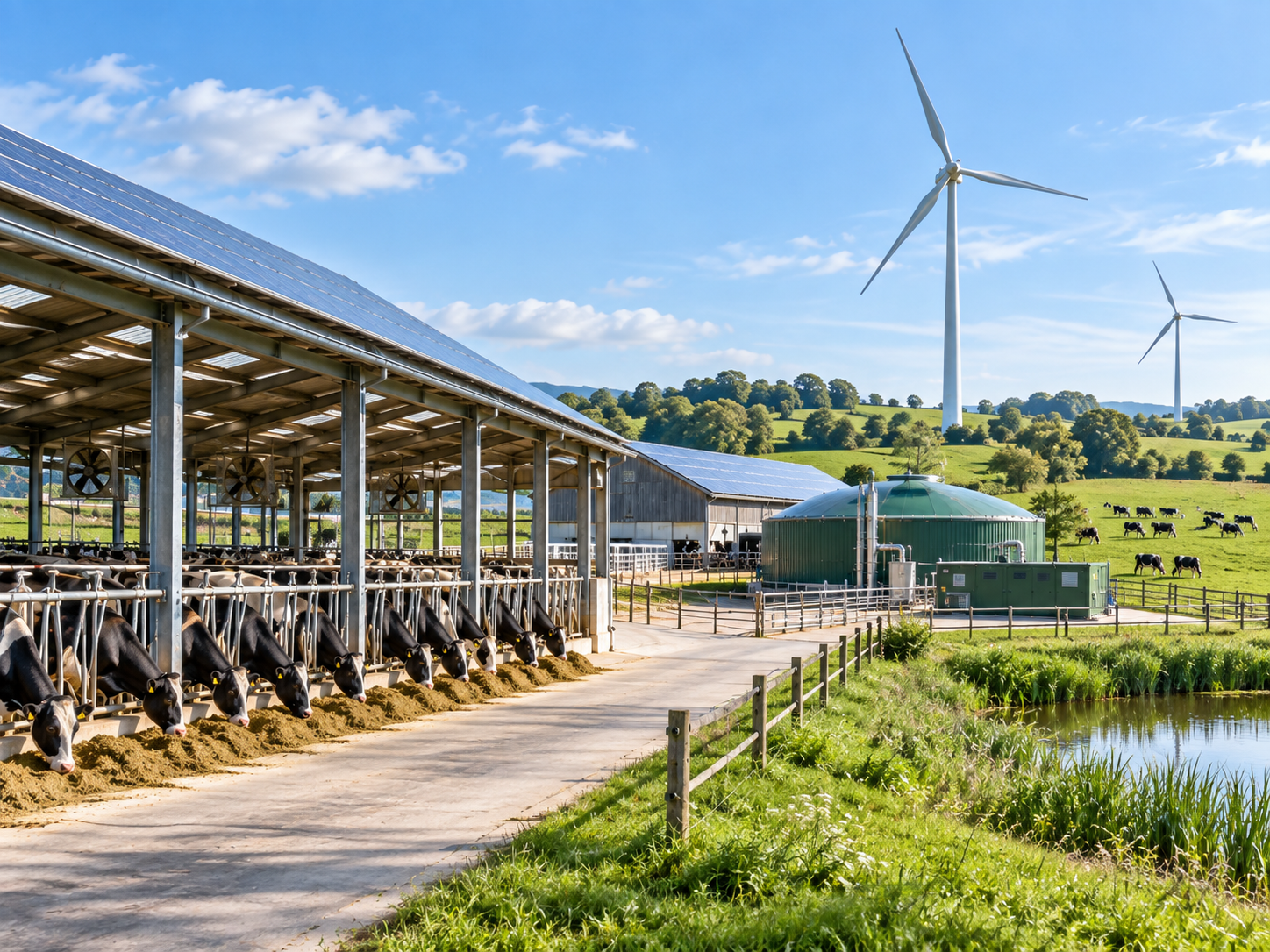
Can be considered in suitable windy areas to complement the farm's electricity structure.
The energy solution can be selected as a single module or as a combined system after reviewing the farm's load profile, available resources and site conditions.
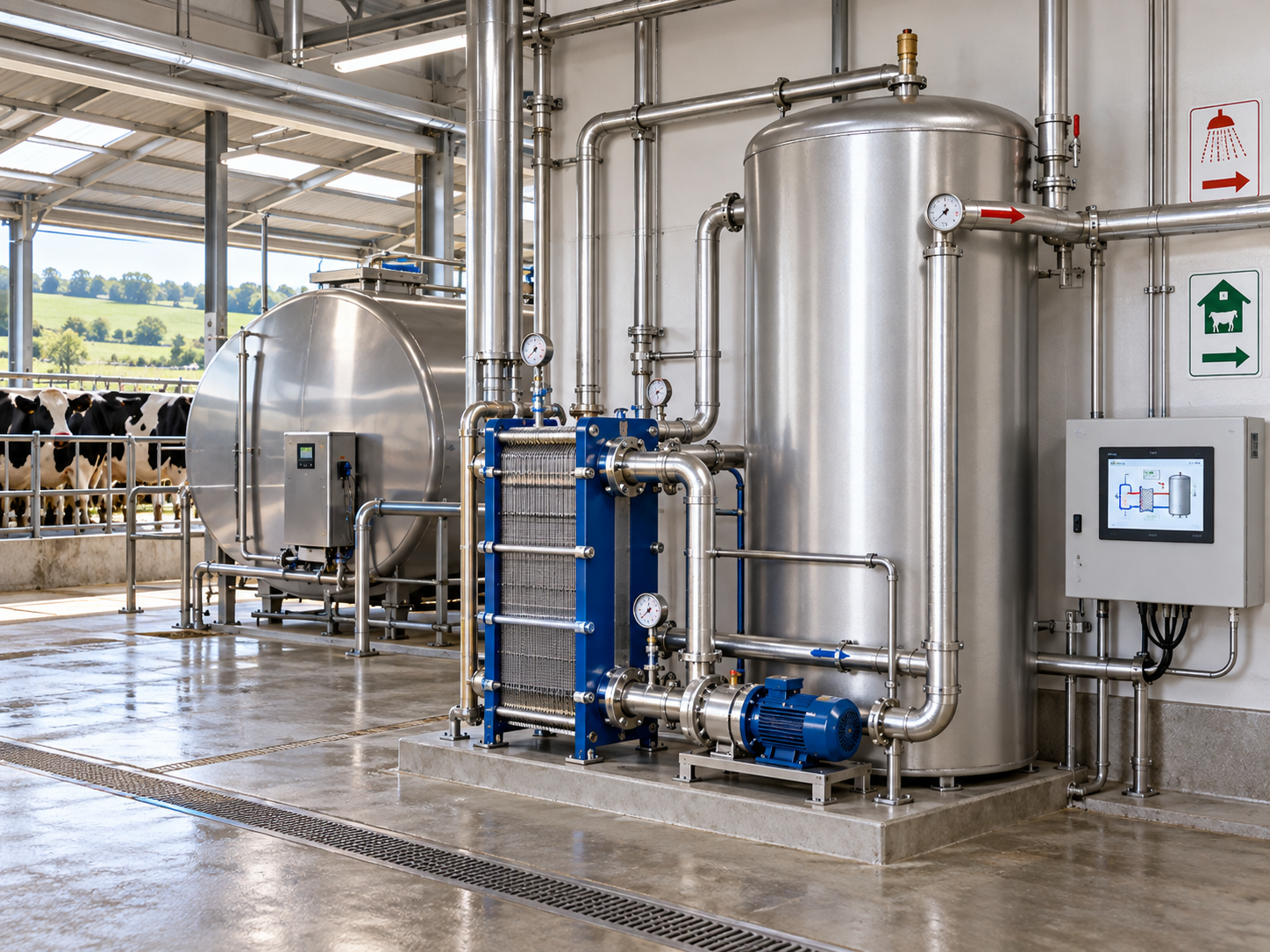
Heat generated in the milk-cooling process can be transferred through a heat exchanger. Under suitable operating conditions, the system can preheat water to around 55°C, which may then be used for equipment cleaning, udder washing and other farm needs.
Manure, slurry, organic wastewater and similar farm residues can enter a digestion system after pretreatment. The resulting biogas can be used for power and heat, while digestate can be managed as fertilizer material.
Solar modules can be mounted directly on farm buildings, or integrated into the building structure where appropriate, helping make better use of roof area and reduce purchased electricity.
Wind energy can be considered for coastal, grassland, mountainous or plateau regions where wind conditions are favorable and where on-site generation fits the overall project plan.
The items below are practical planning references. Exact capacity, equipment size and utility performance must be confirmed according to the actual farm data and local conditions.
Please share the farm energy demand and site data so the system can be configured more accurately.
| System Application | Suitable for dairy farms, cattle farms and similar livestock projects that want to improve energy utilization and reduce operating energy costs. |
| Main Modules | Heat recovery system, biogas system, photovoltaic power generation system and optional wind power system. |
| Heat Recovery Function | Recovers heat during milk cooling and transfers it to a water-heating loop. In practical dairy applications, recovered water can be preheated to around 55°C under suitable operating conditions. |
| Typical Heat Recovery Uses | Equipment washing, udder cleaning, hot-water preparation and other farm service uses. |
| Biogas Feedstock | Manure, slurry, straw-containing residues, organic wastewater and other biodegradable farm by-products after suitable pretreatment. |
| Biogas Output Use | Can be used for gas utilization, electricity generation, thermal use and digestate/fertilizer recovery, depending on the selected engineering scope. |
| Solar System Types | Rooftop mounted PV and building-integrated PV (BIPV) can both be considered according to the building structure and project target. |
| Wind Power Option | Best considered in areas with favorable wind resources. Turbine type and rated capacity should be selected only after site evaluation. |
| Capacity Range | There is no fixed universal capacity. Final kW / kWp / m³ / hot-water volume depends on herd size, farm load, available organic input, roof area and local climate conditions. |
| Design Basis | Farm layout, building drawings, utility demand, manure volume, local irradiation, wind resources, grid-connection conditions and project budget. |
Share your farm information with us and we can recommend a practical combination of heat recovery, biogas, solar or wind modules for your project.
Get a Solution ProposalRenewable energy on a cattle farm is not only about power generation. It is also about using the farm's existing resources more efficiently.
Milk cooling energy can be partially recovered instead of being released unused.
Manure and organic residues can become a source of gas, heat or electricity when conditions allow.
Barn roofs can support PV installation when the structure and project plan are suitable.
Wind or solar modules can be selected according to local natural-resource conditions and project feasibility.
Each farm has a different energy structure. A practical system is usually confirmed in several steps.
Review herd size, milk output, energy demand, available roof area and organic-waste volume.
Check the building layout, utility infrastructure, local solar conditions and wind-resource suitability.
Choose the practical combination of heat recovery, biogas, solar PV and/or wind power.
Confirm the technical scope, utility target, installation conditions and quotation details.
The following images show practical references for energy use on modern cattle and dairy farms.
Example of a milk-cooling heat-recovery section with a heat exchanger, water tank and control equipment.
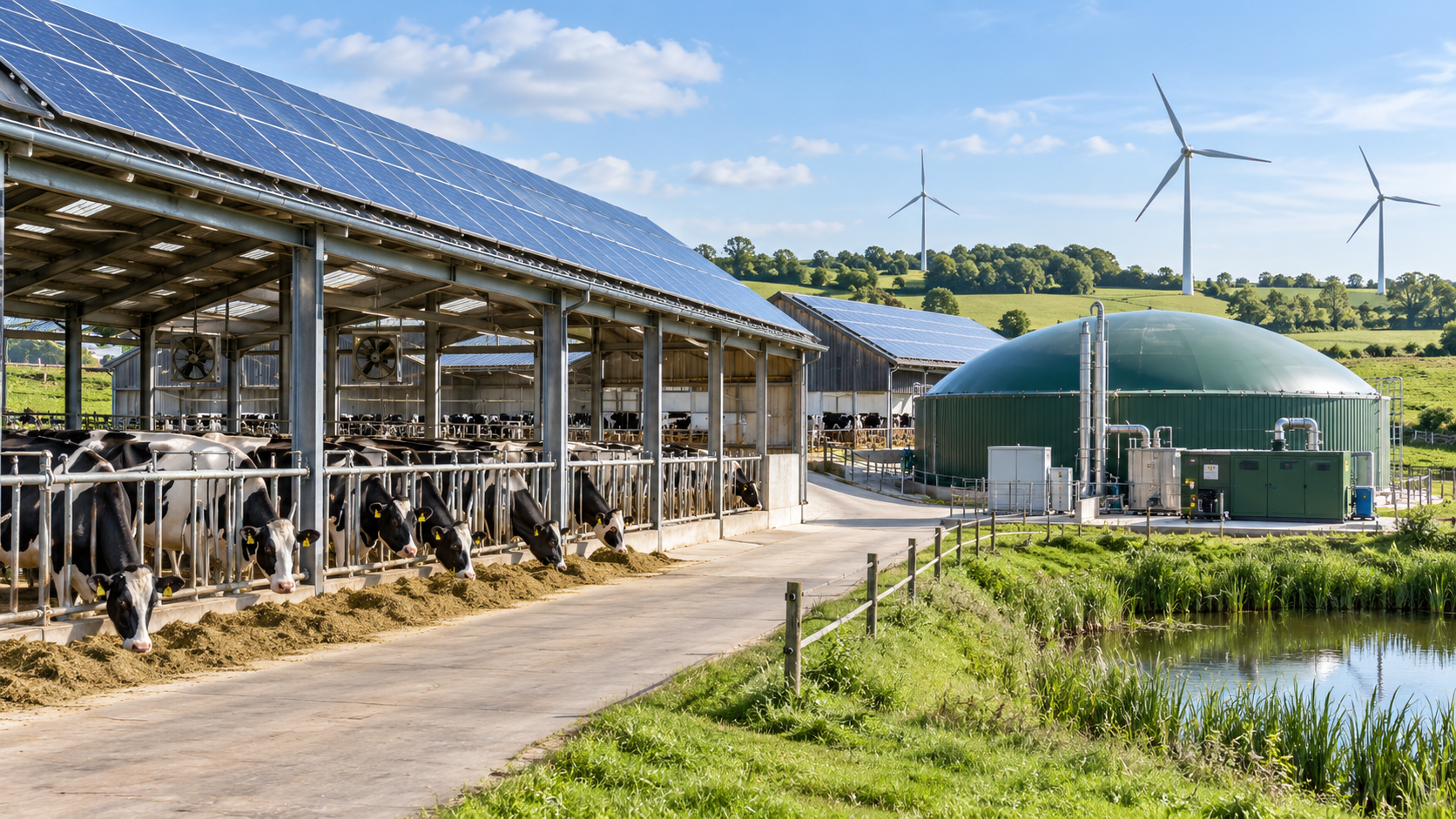
Example of a biogas plant using farm organic input and integrated energy equipment.
Example of rooftop solar application for a modern dairy barn with related power equipment.
Common questions about renewable energy systems for cattle farms.
Yes, but the final combination depends on the farm's real conditions. Some farms may use only one or two modules, while others may combine heat recovery, biogas and solar power in one project.
It can recover heat during milk cooling and use that heat to preheat water for farm operations, which helps reduce separate water-heating demand.
Typical inputs include manure, slurry, certain organic residues and wastewater. The exact feedstock plan depends on the farm process and pretreatment arrangement.
Solar suitability depends mainly on roof area, structural condition and local irradiation. Wind suitability depends on site wind conditions and project feasibility. A project review is recommended before selection.
No. Because farm size, herd structure, local climate, power demand and manure volume vary widely, final parameters should be confirmed according to the actual project data.
Please share your farm layout, building dimensions, herd size, milk output, power demand, hot-water demand, manure quantity, preferred energy modules and local utility conditions.
Zhengzhou Jinhui Agricultural S&T Co., Ltd. provides livestock equipment & smart farm one-stop solutions for global poultry, swine & sheep farms. CE/ISO-certified, OEM/ODM support, 15+ years’ export experience. Request a project assessment today.
Room 1318, 13/F, Building A, Yingxie Plaza, 138 Zhengbian Road, Jinshui District, Zhengzhou City, Henan Province
Copyright © 2026 Zhengzhou Jinhui Agricultural S&T Co., Ltd. All rights reserved. Privacy Policy