 EN
EN
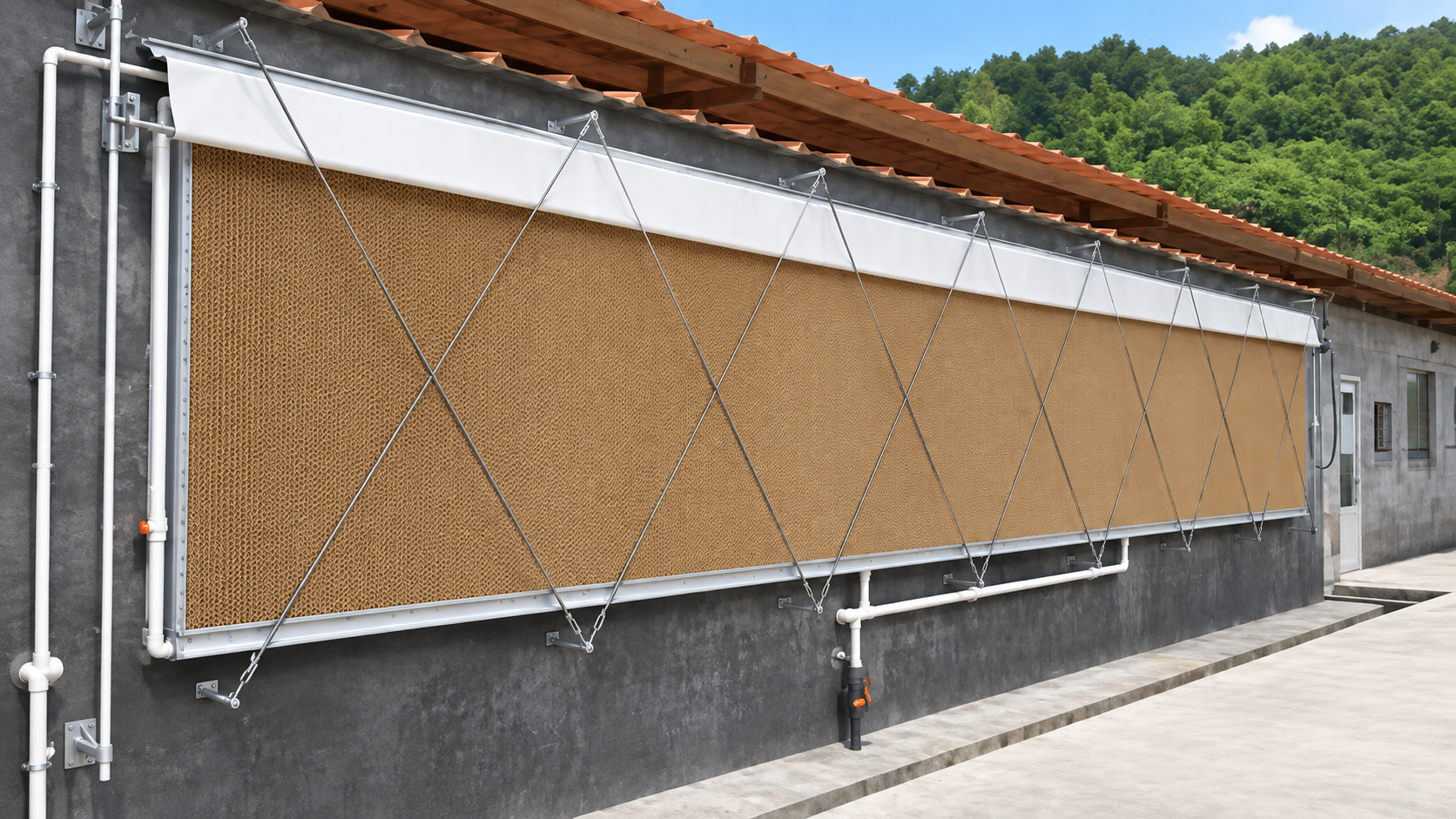
- Overview
- Recommended Products
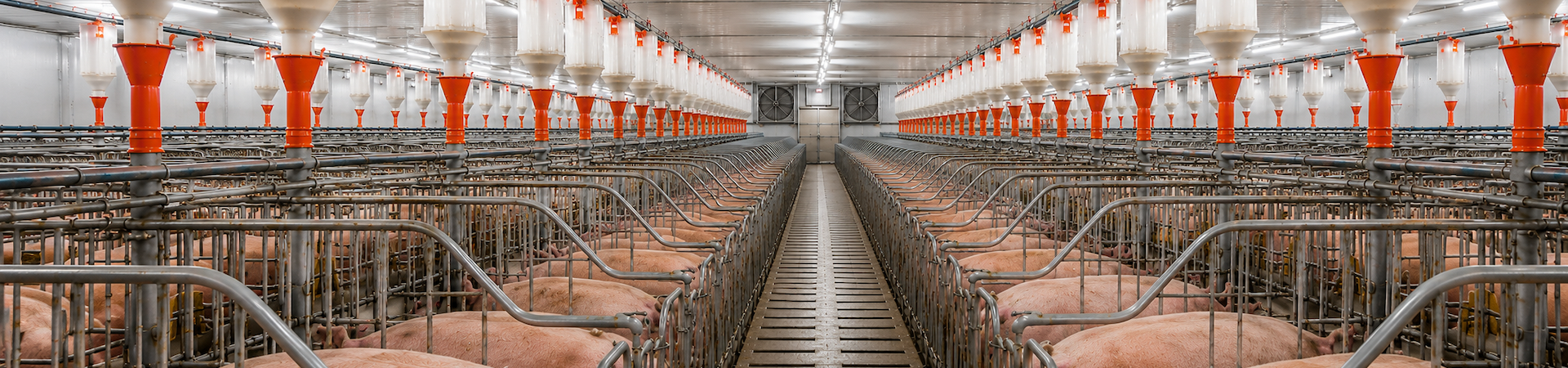
Intelligent Pig House Environment Control System
An integrated environmental management solution for pig houses, coordinating ventilation, air inlets, evaporative cooling, heating and filtration according to project conditions and the requirements of different production stages.
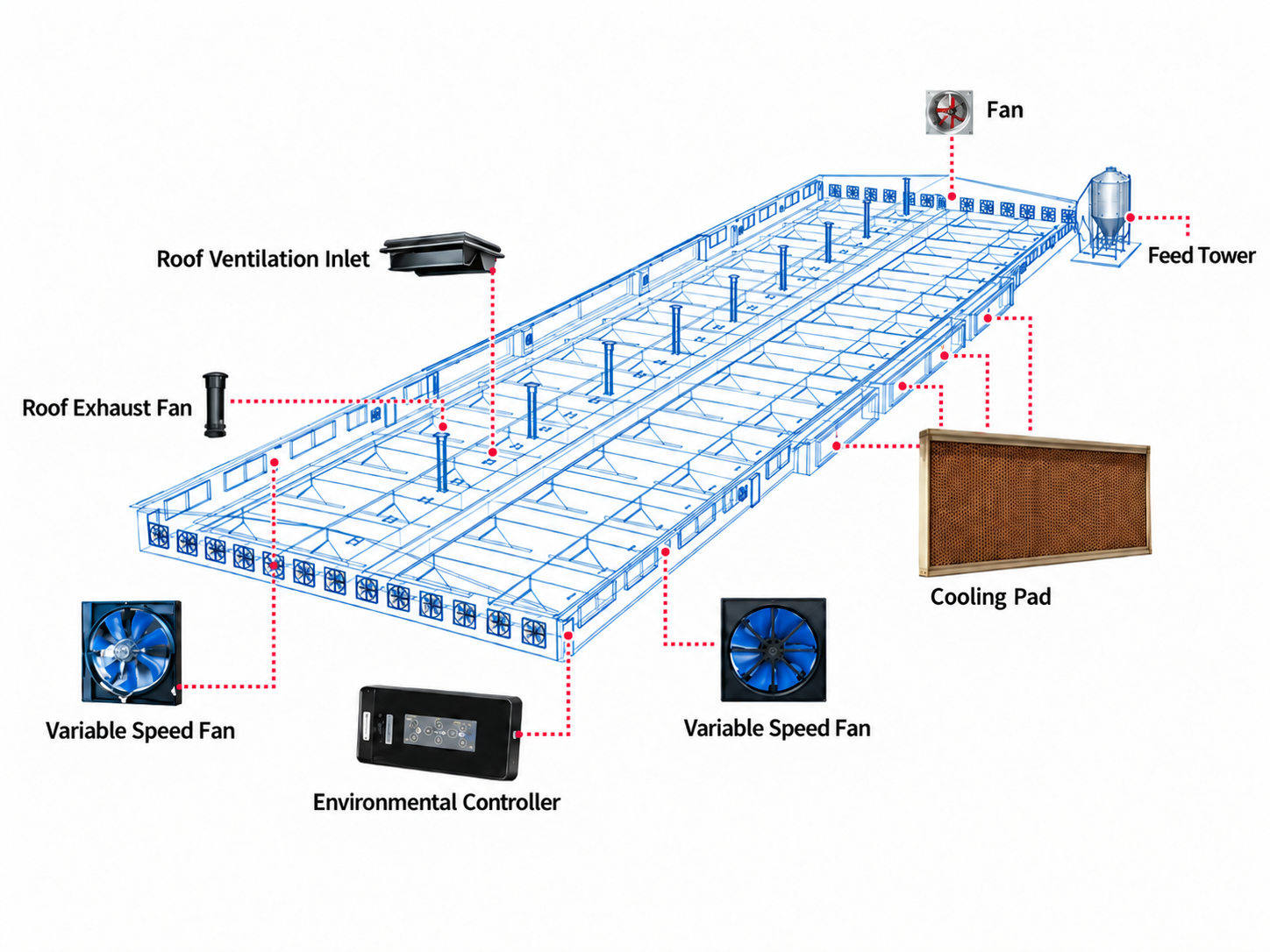
Coordinated Control From Air Inlet to Exhaust
The system is configured as a complete airflow and temperature-management solution rather than as isolated equipment. Final operating logic should be set according to barn dimensions, pig stage, stocking density and local climate.
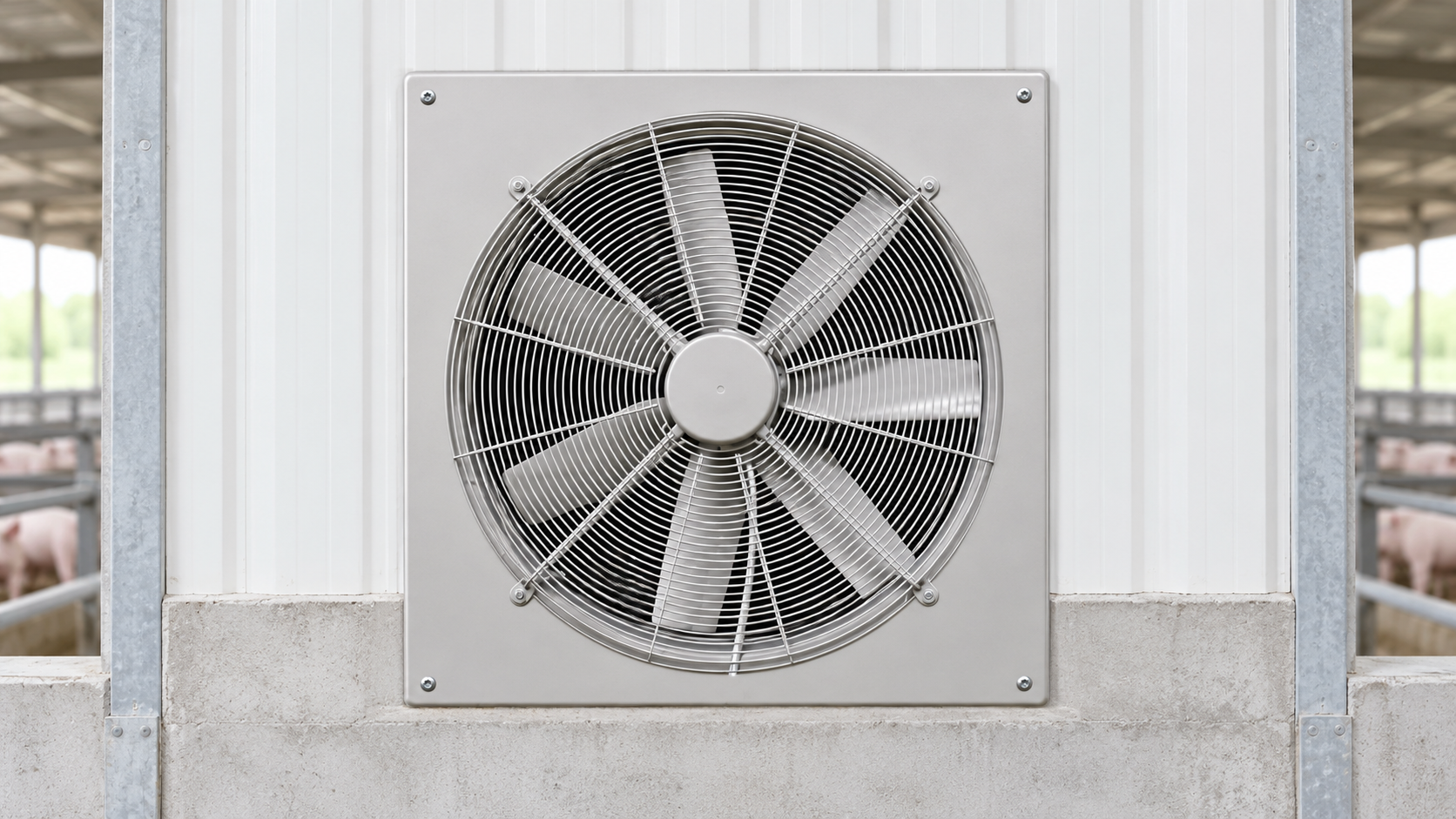
Built Around the Real Conditions of the Pig House
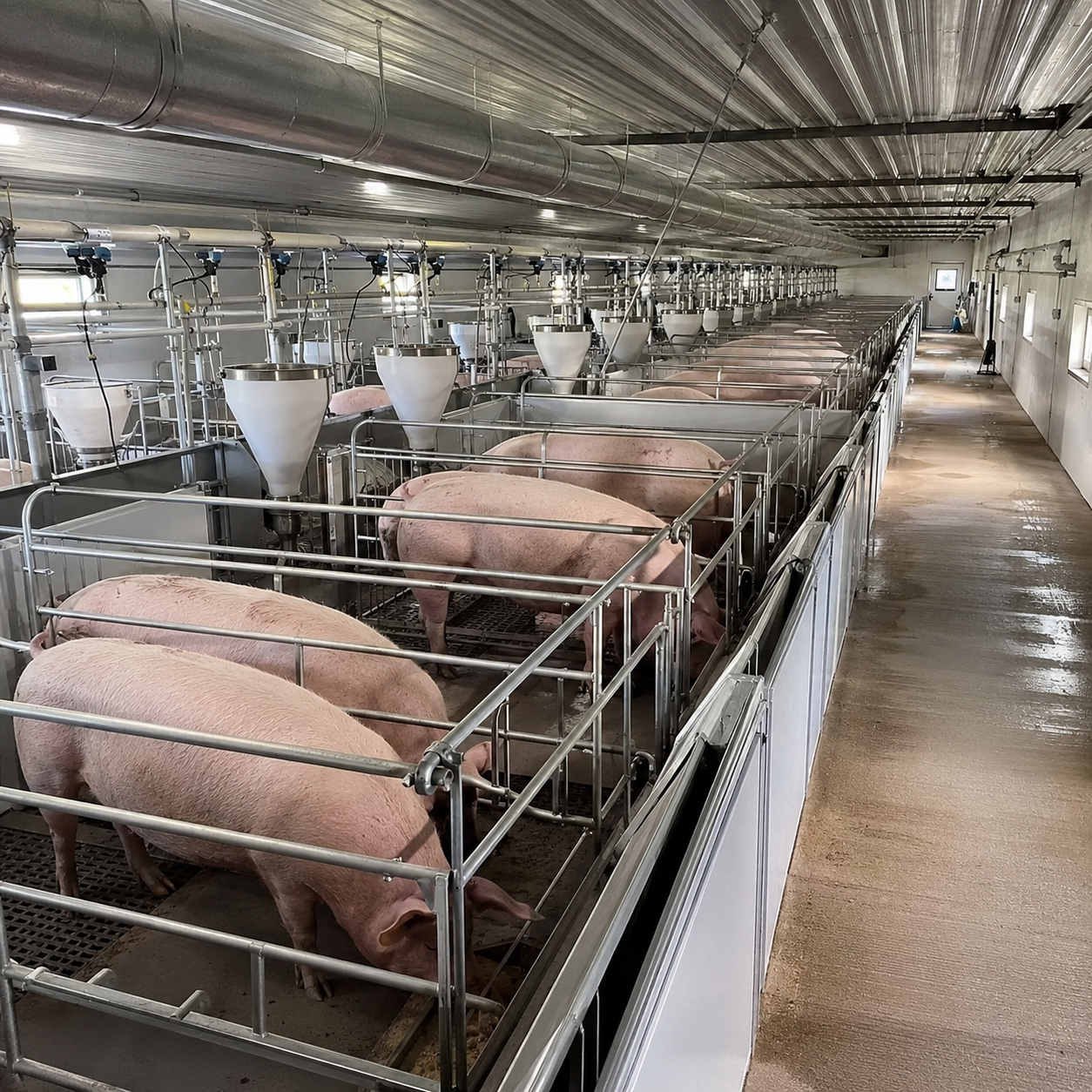
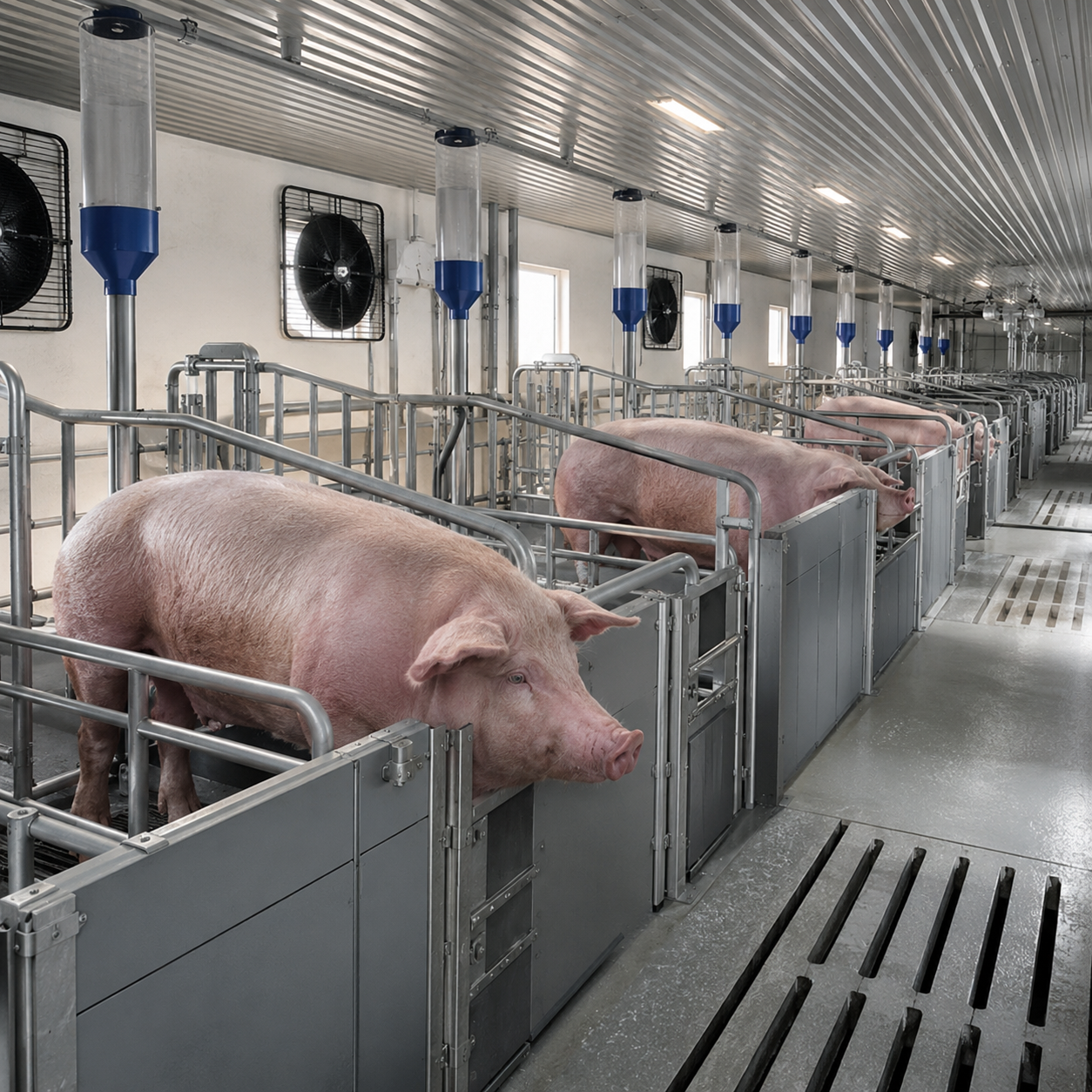
A suitable environment control plan helps maintain more stable temperature, ventilation and humidity conditions for pigs. It can also support farm management by reducing excessive heat, stale air, dust accumulation and other environmental stress factors.
Environment Control Equipment Modules
The following modules can be selected and combined according to the pig house ventilation mode, local climate and production requirements.
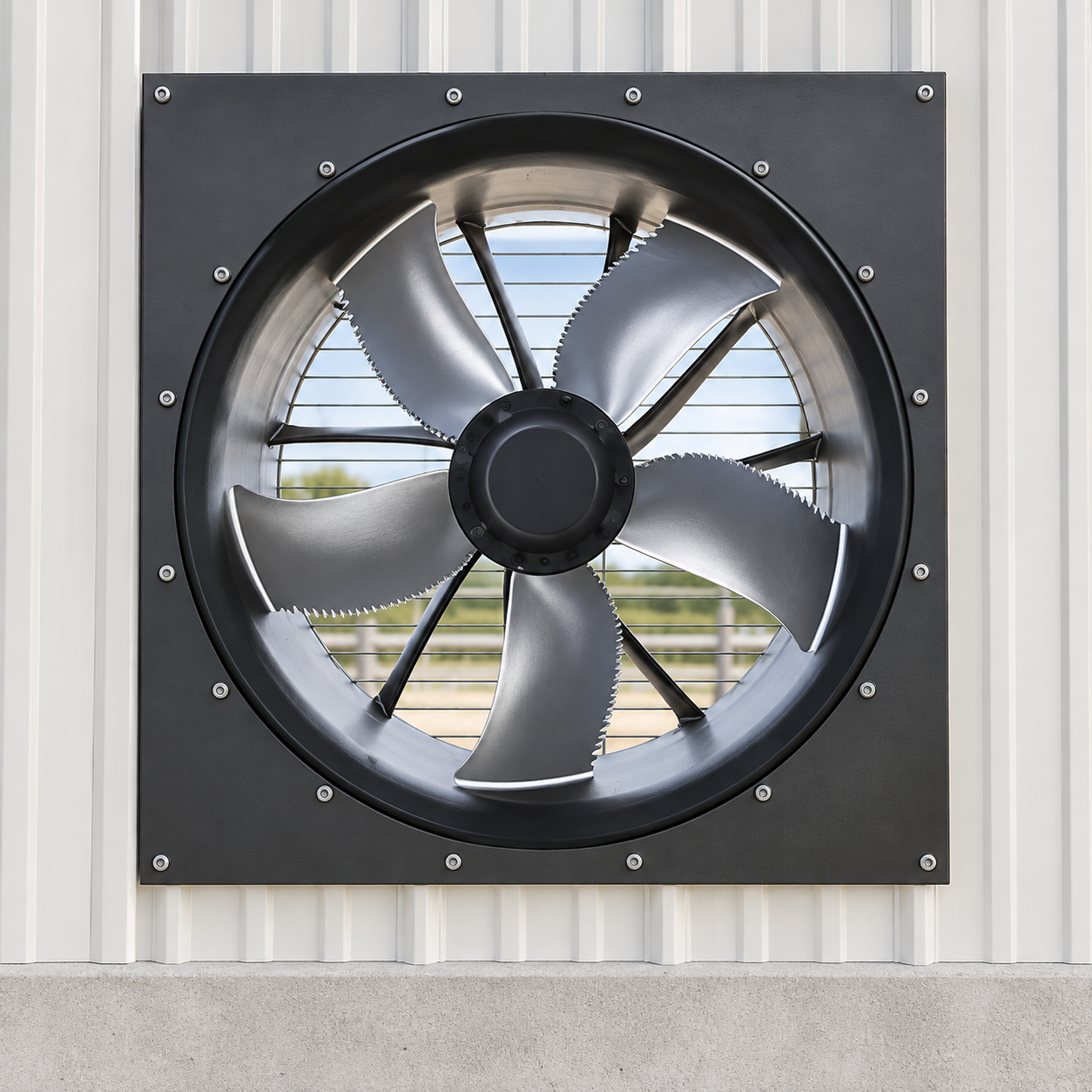
EC Ventilation Fan
Suitable for projects requiring adjustable ventilation output and coordinated environmental control. Final fan size and operating range depend on the selected model.
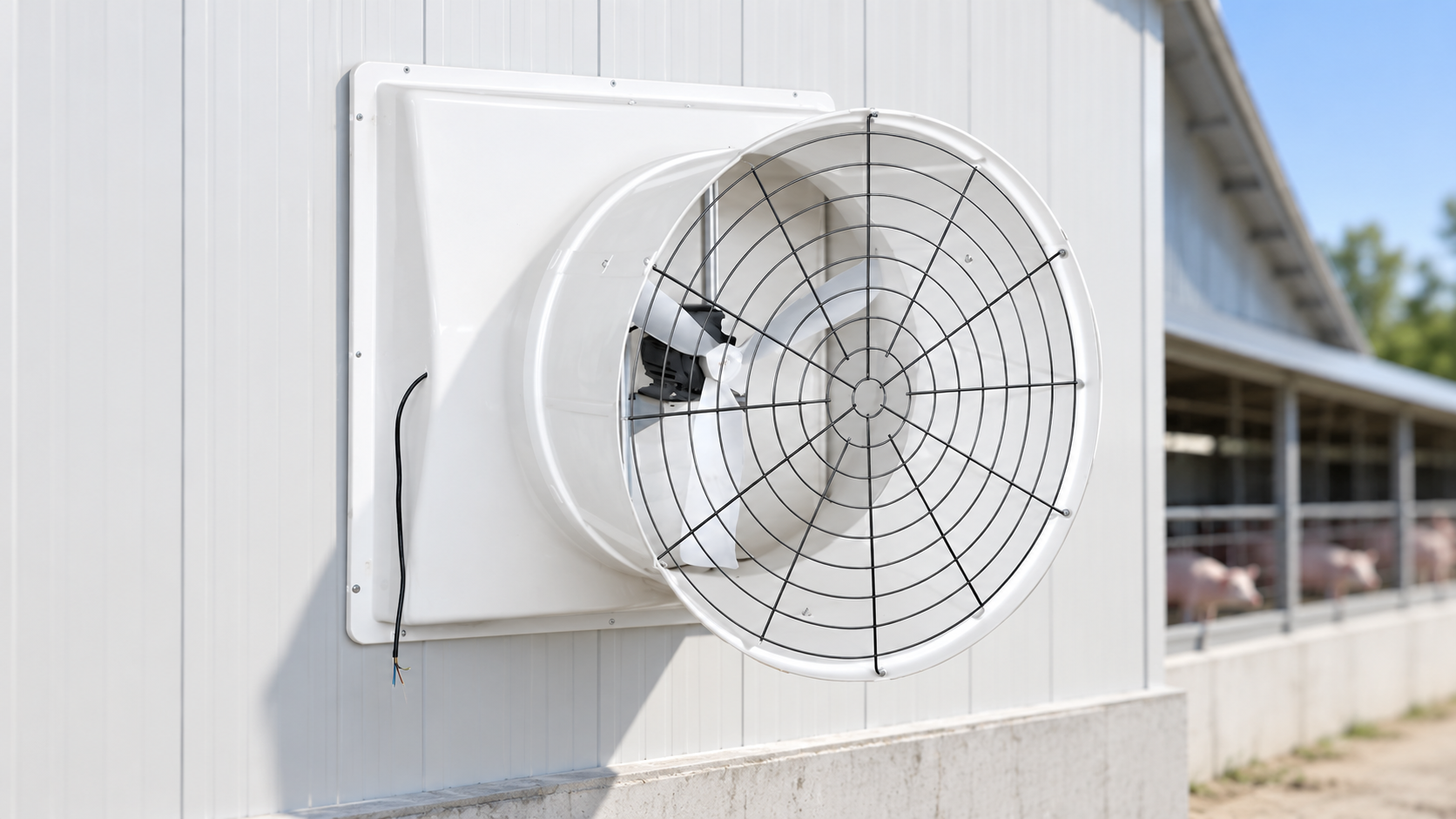
Fiberglass Exhaust Fan
A corrosion-resistant housing option for pig house exhaust ventilation. Fan quantity and installation position should be determined from the required airflow.
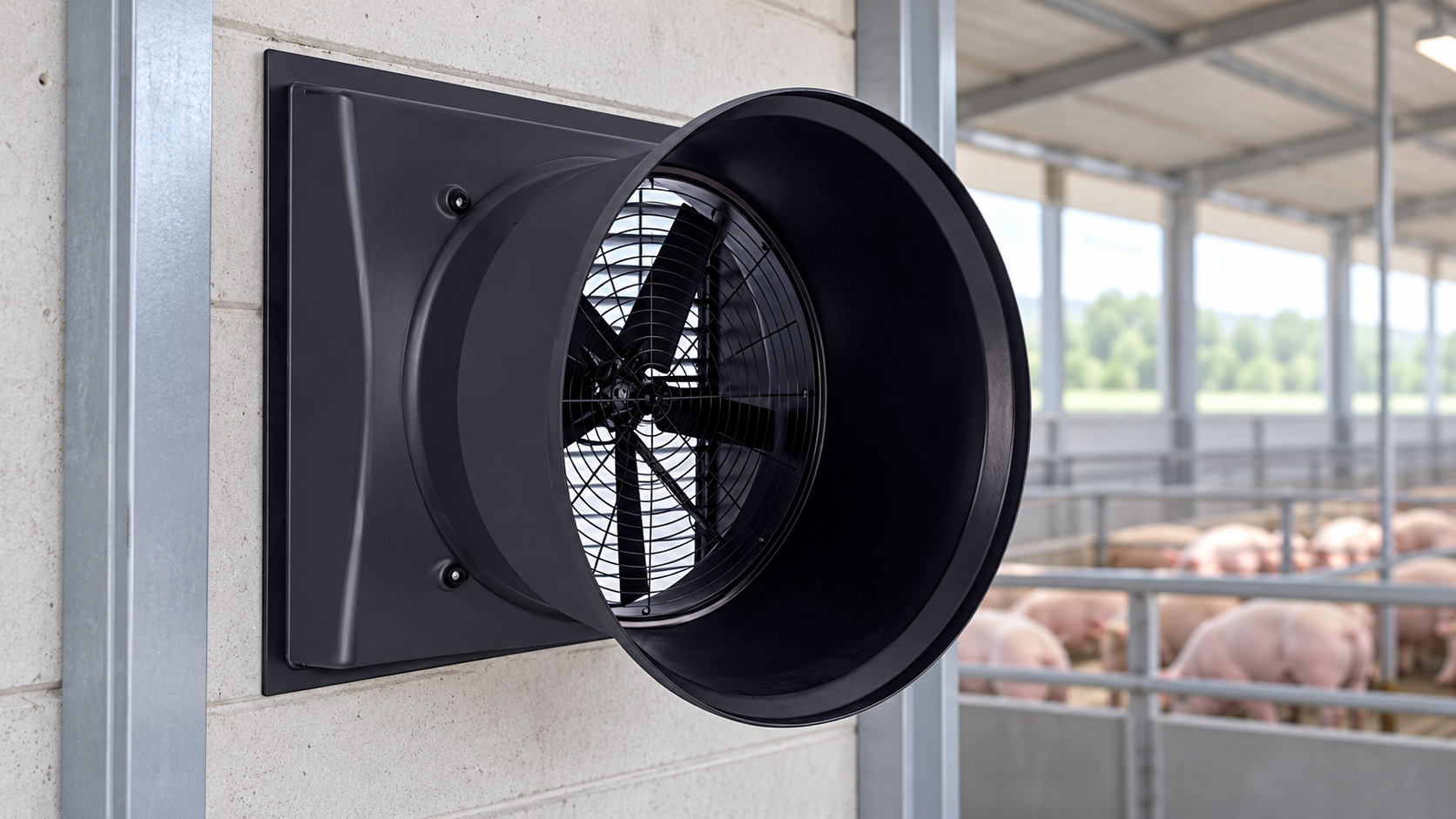
Rotomolded Housing Fan
A packaged fan option for livestock-house ventilation applications where a protected housing and practical installation format are preferred.
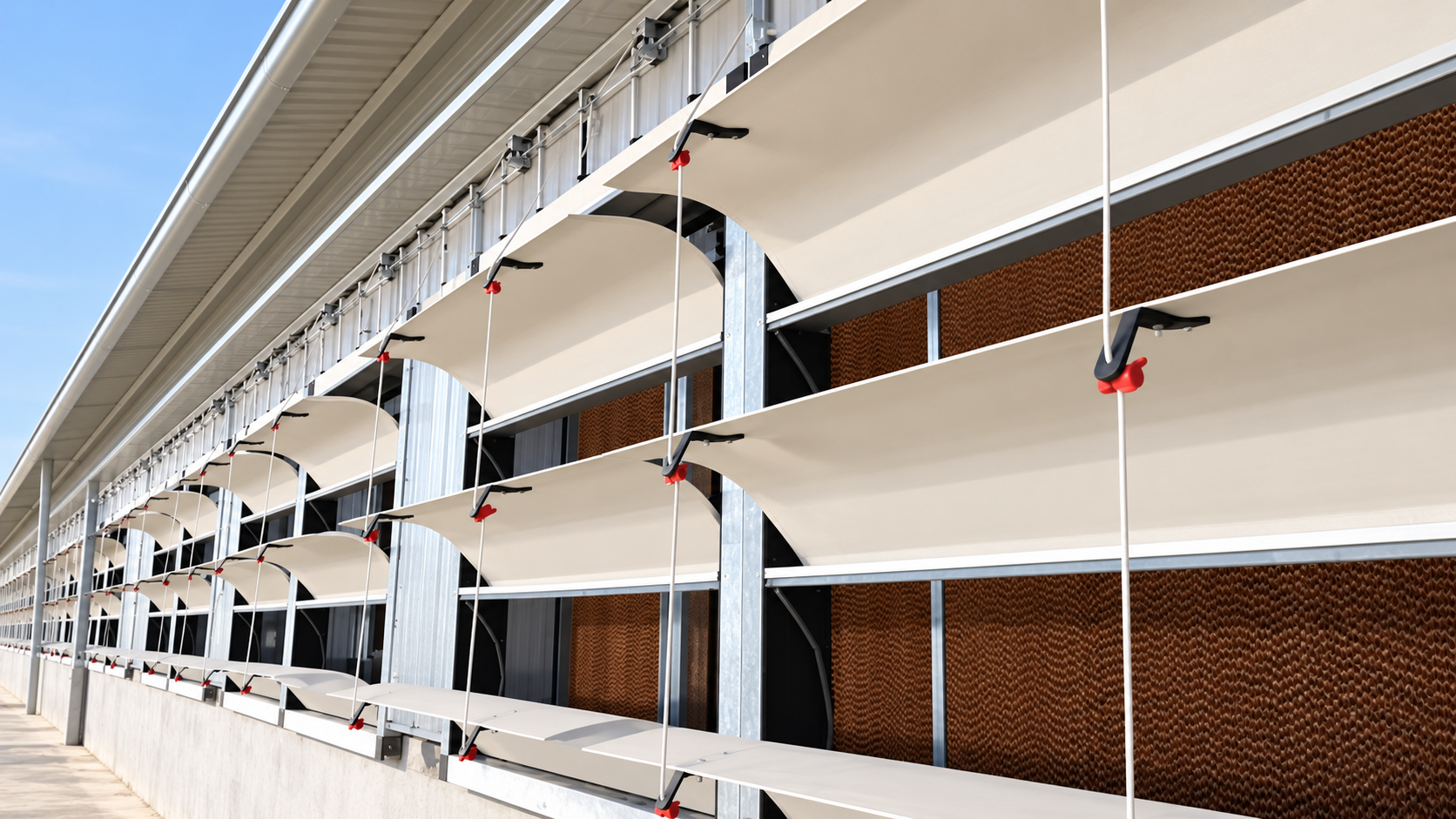
Ventilation Air Inlet
Guides incoming air into the pig house and helps organize the airflow path when used as part of a negative-pressure ventilation design.
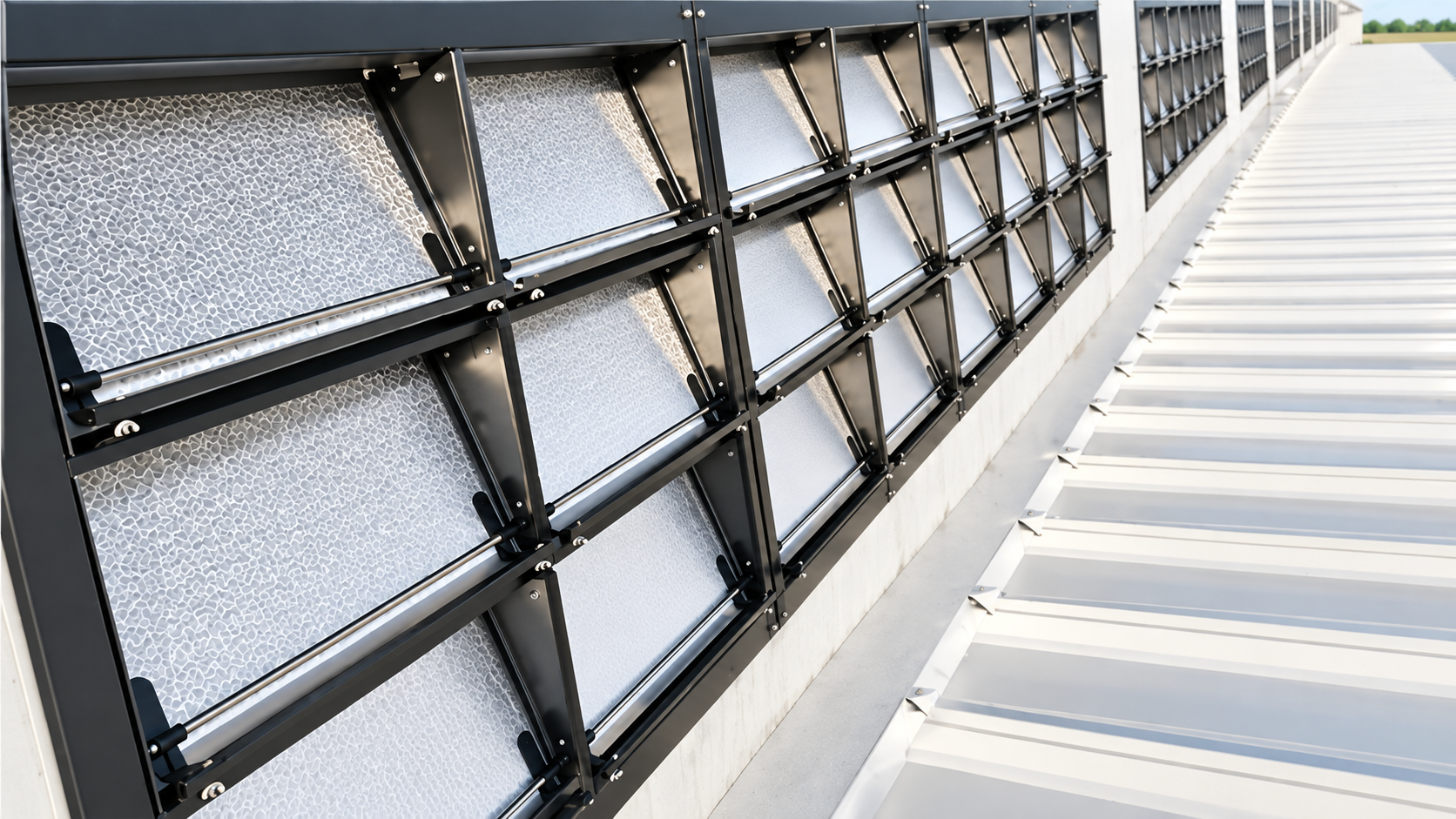
Passive Air Inlet
A non-powered inlet option that can be configured for suitable airflow distribution according to barn pressure and ventilation layout.
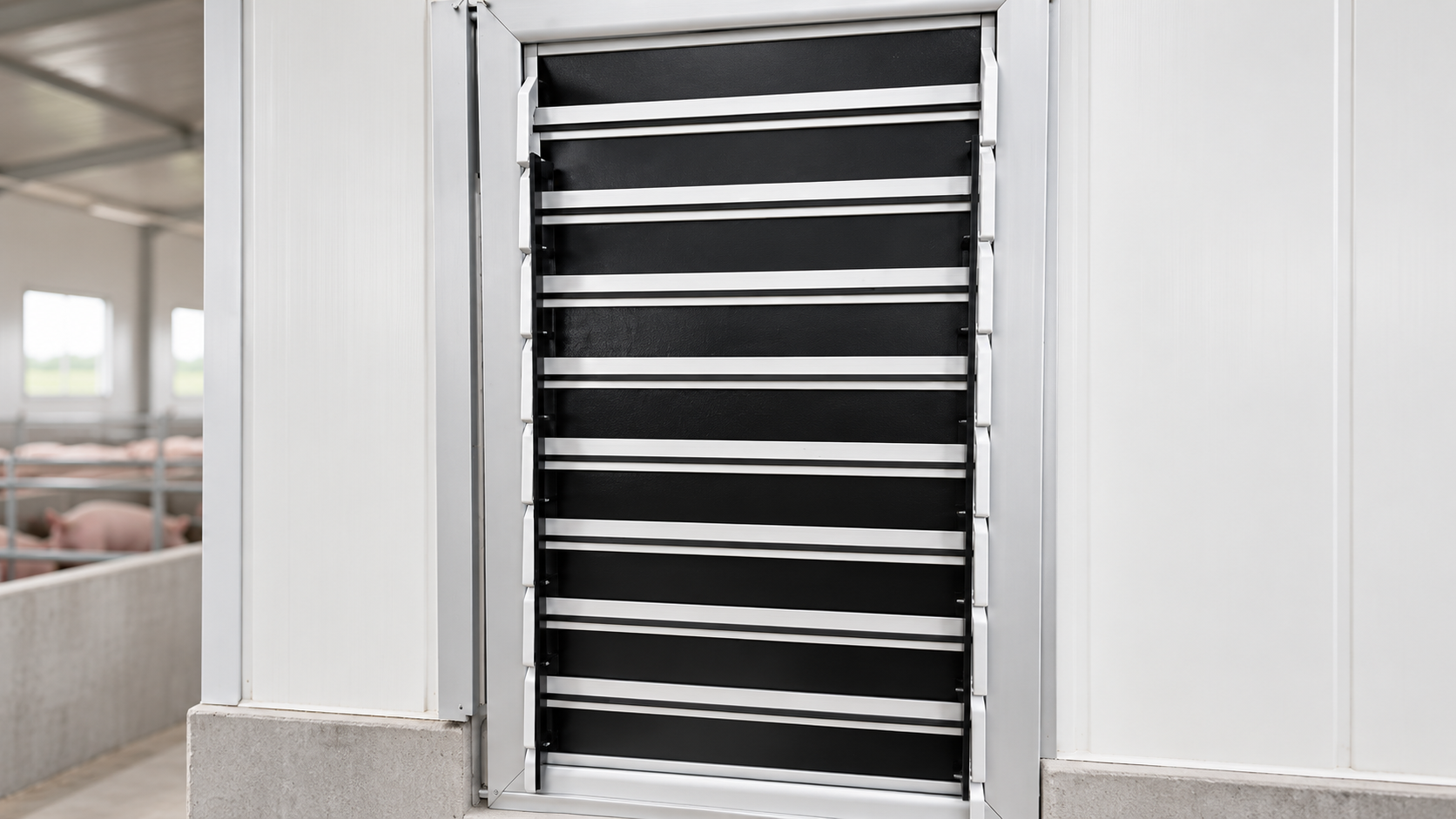
Insulated Louver Inlet
Designed to combine controllable air entry with improved enclosure performance for projects that require seasonal ventilation management.
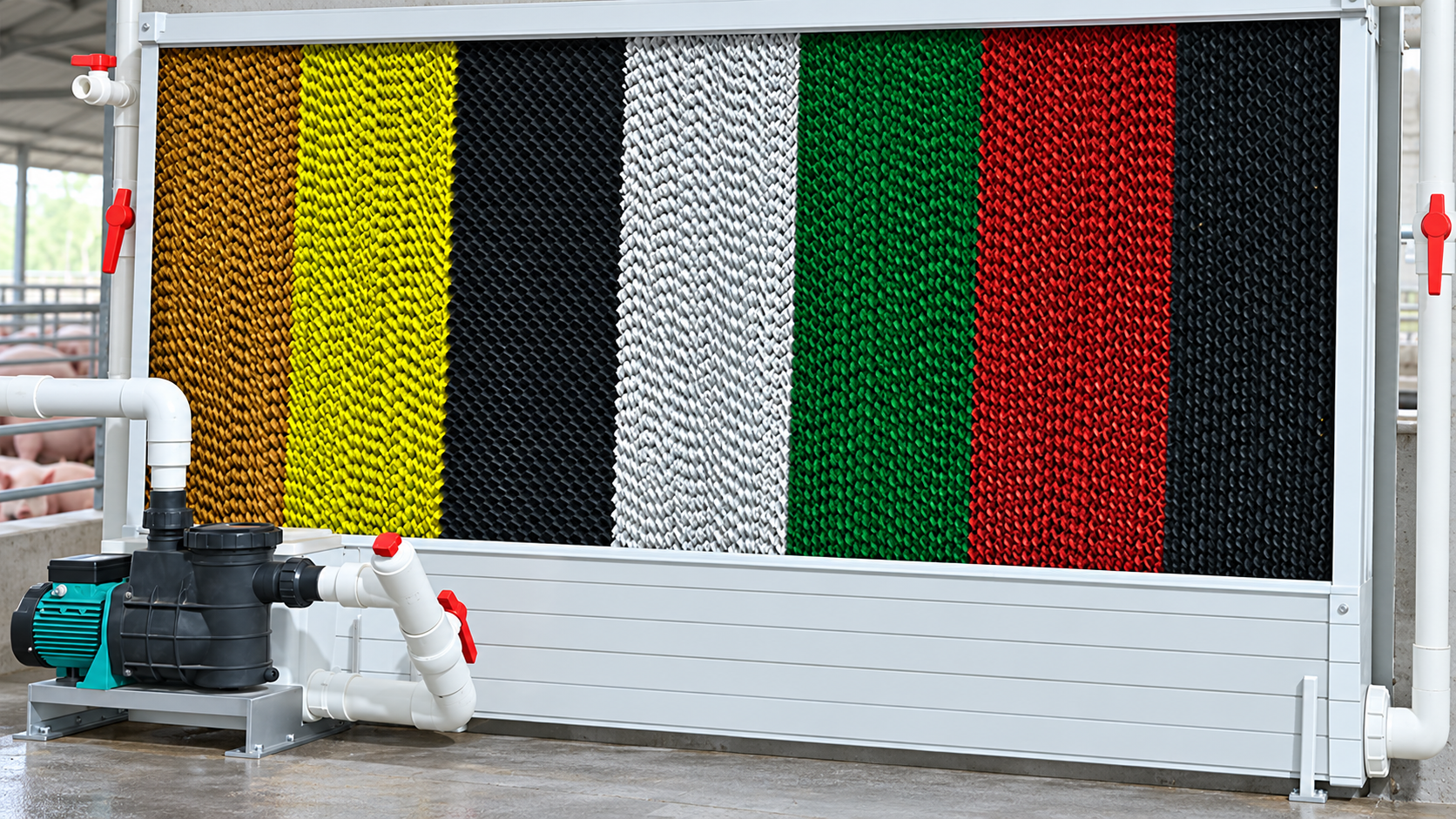
Integrated Cooling Pad
Combines the cooling-pad section with its supporting frame and water circulation arrangement for hot-weather evaporative cooling applications.
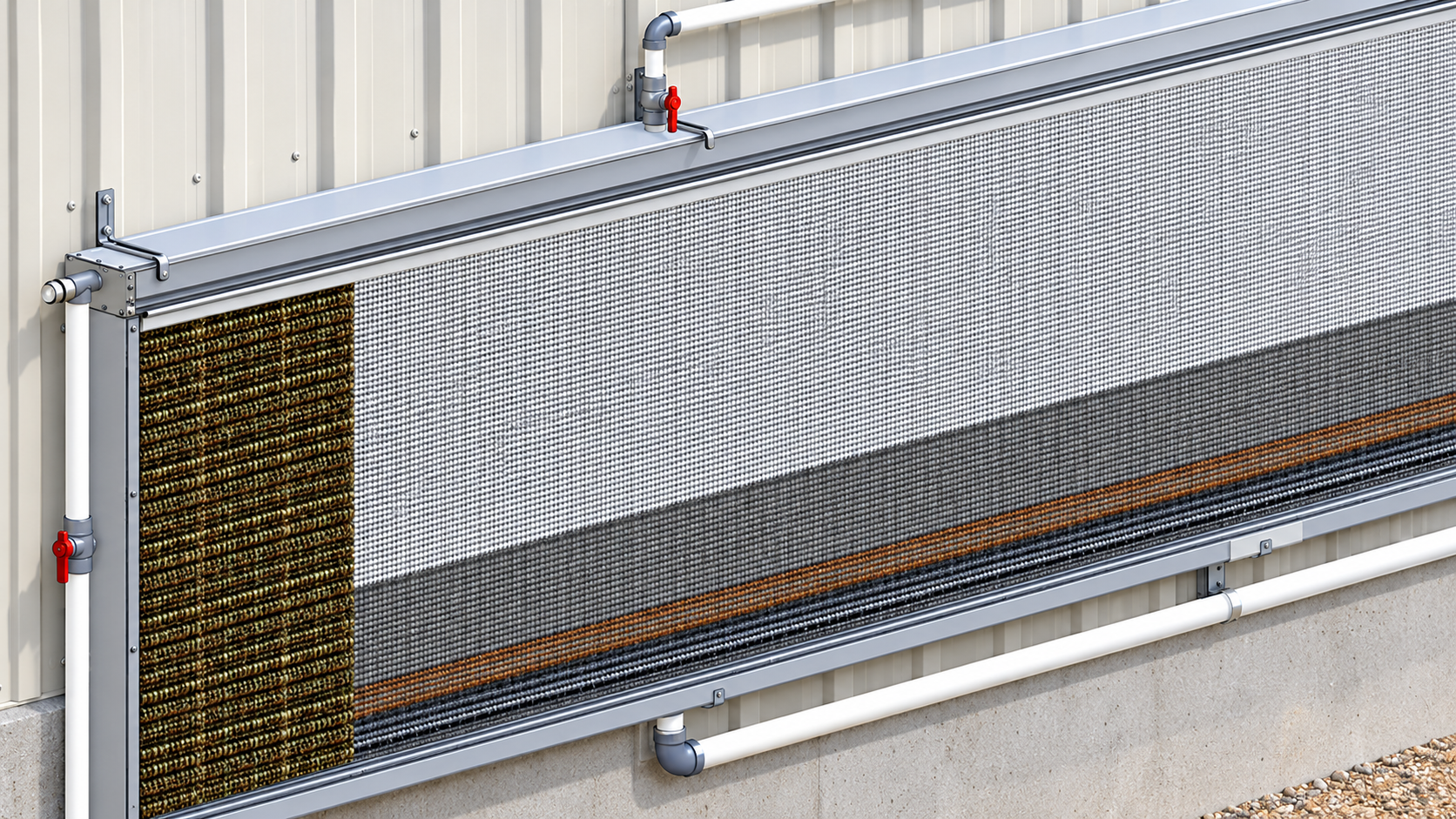
Standard Cooling Pad
Used with suitable exhaust ventilation to support evaporative cooling. Pad area, water circulation and fan matching should be confirmed by calculation.
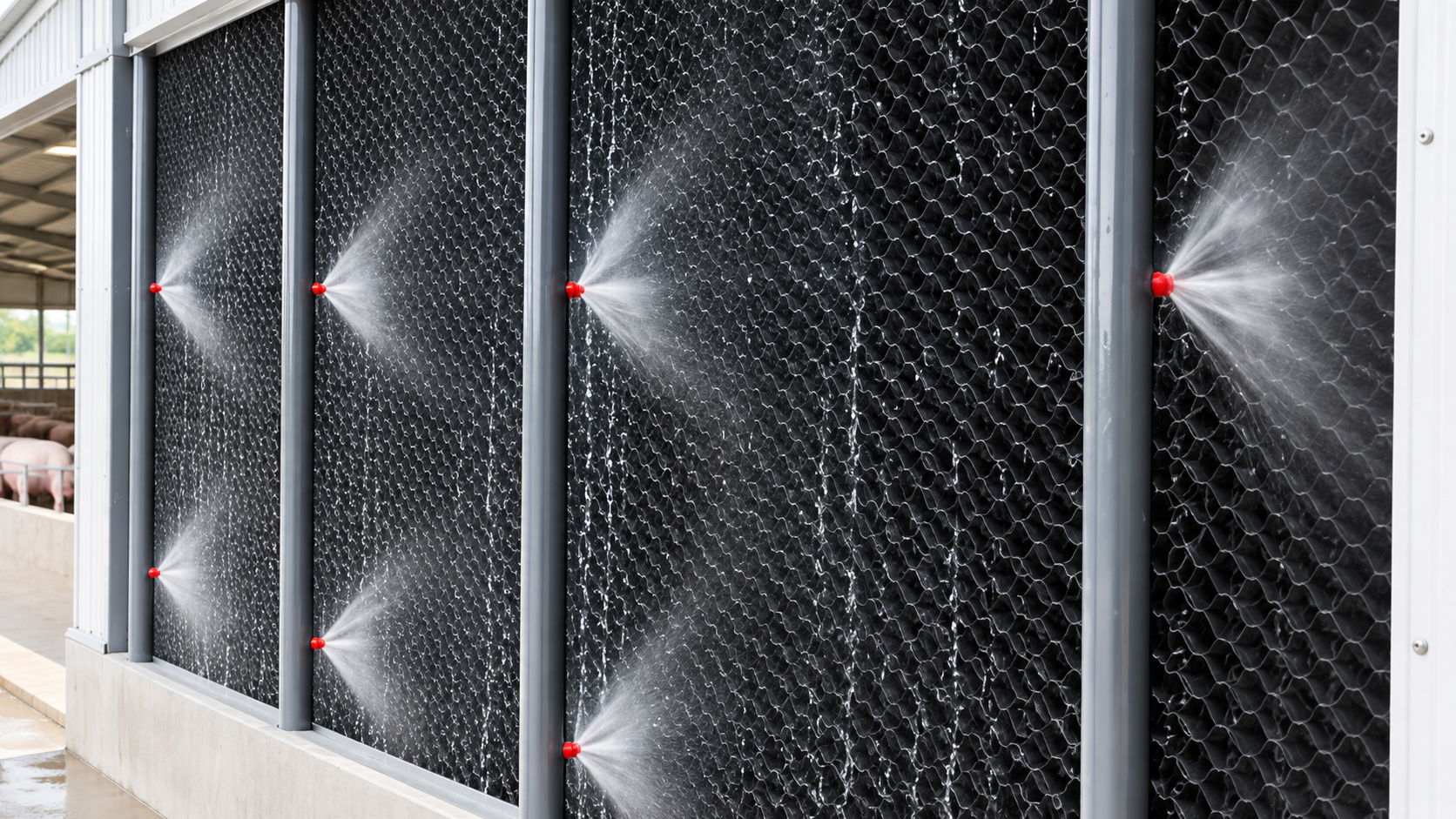
Wet Pad Air-Treatment Module
Can be included where the farm project requires additional treatment of exhaust air. The treatment approach should be selected according to actual farm conditions.
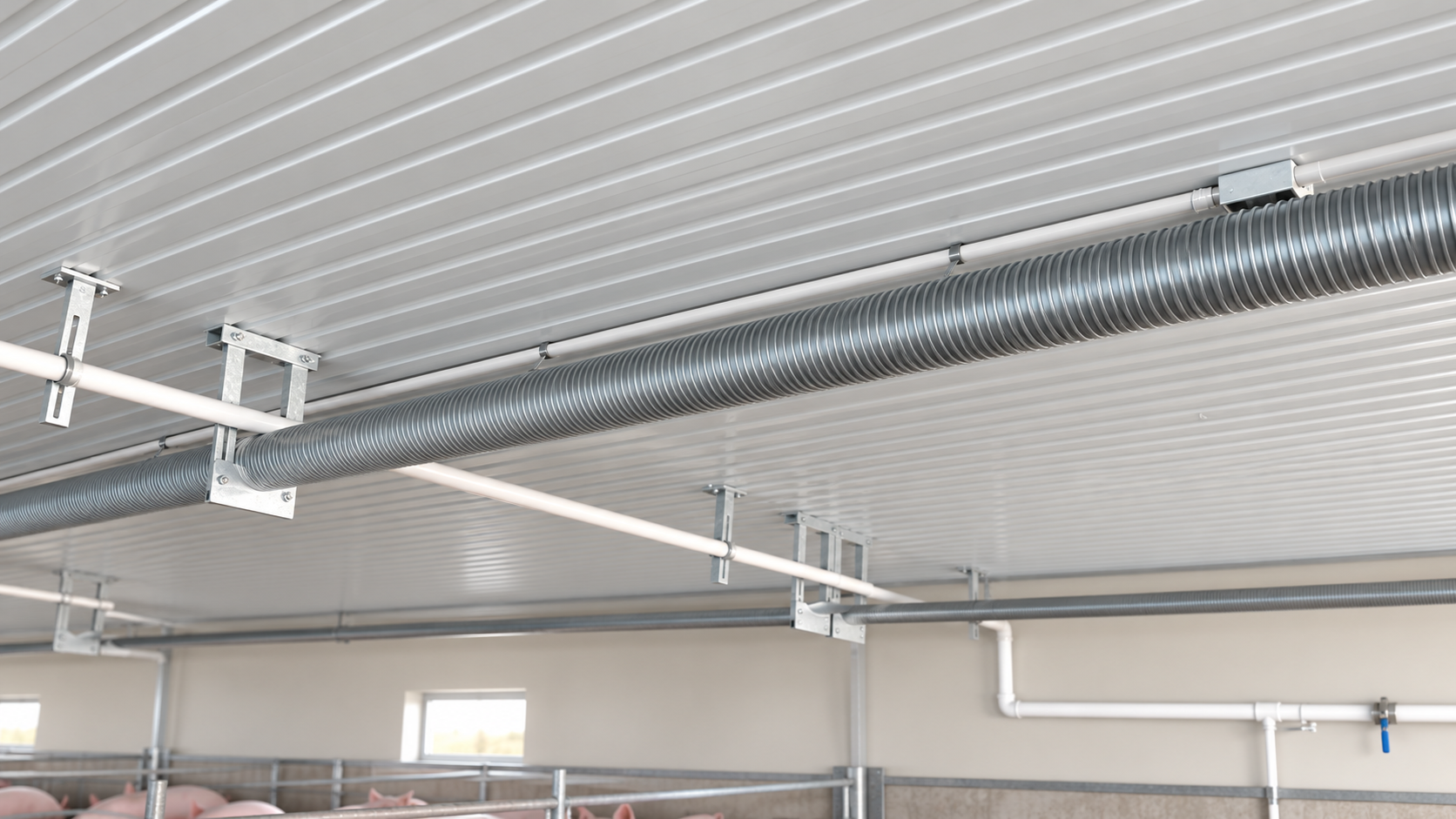
Pig House Heating Equipment
Provides supplementary heat during cold periods or for production stages with higher thermal requirements. Heating capacity must be sized from project heat-load conditions.
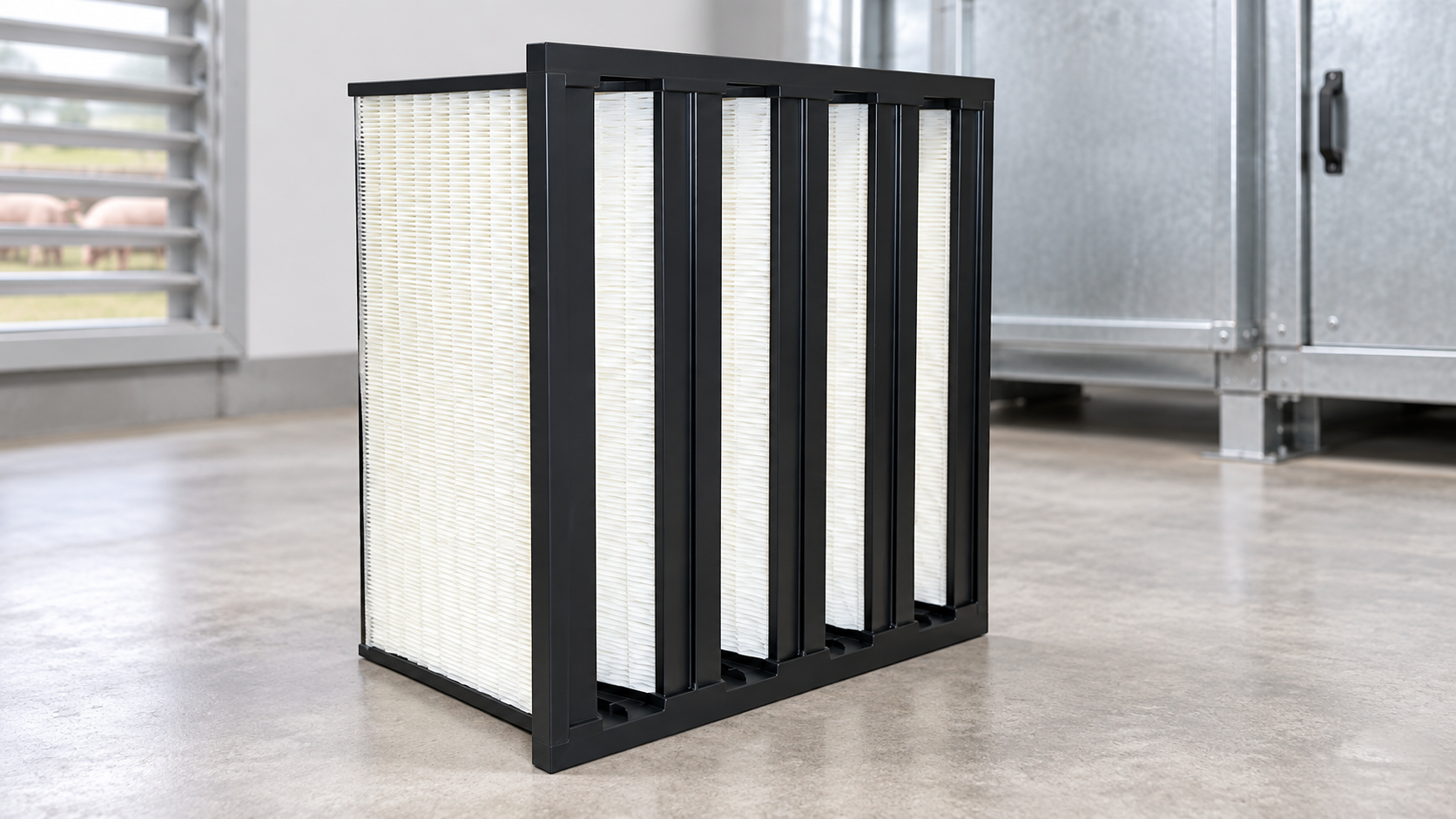
Air Filtration Equipment
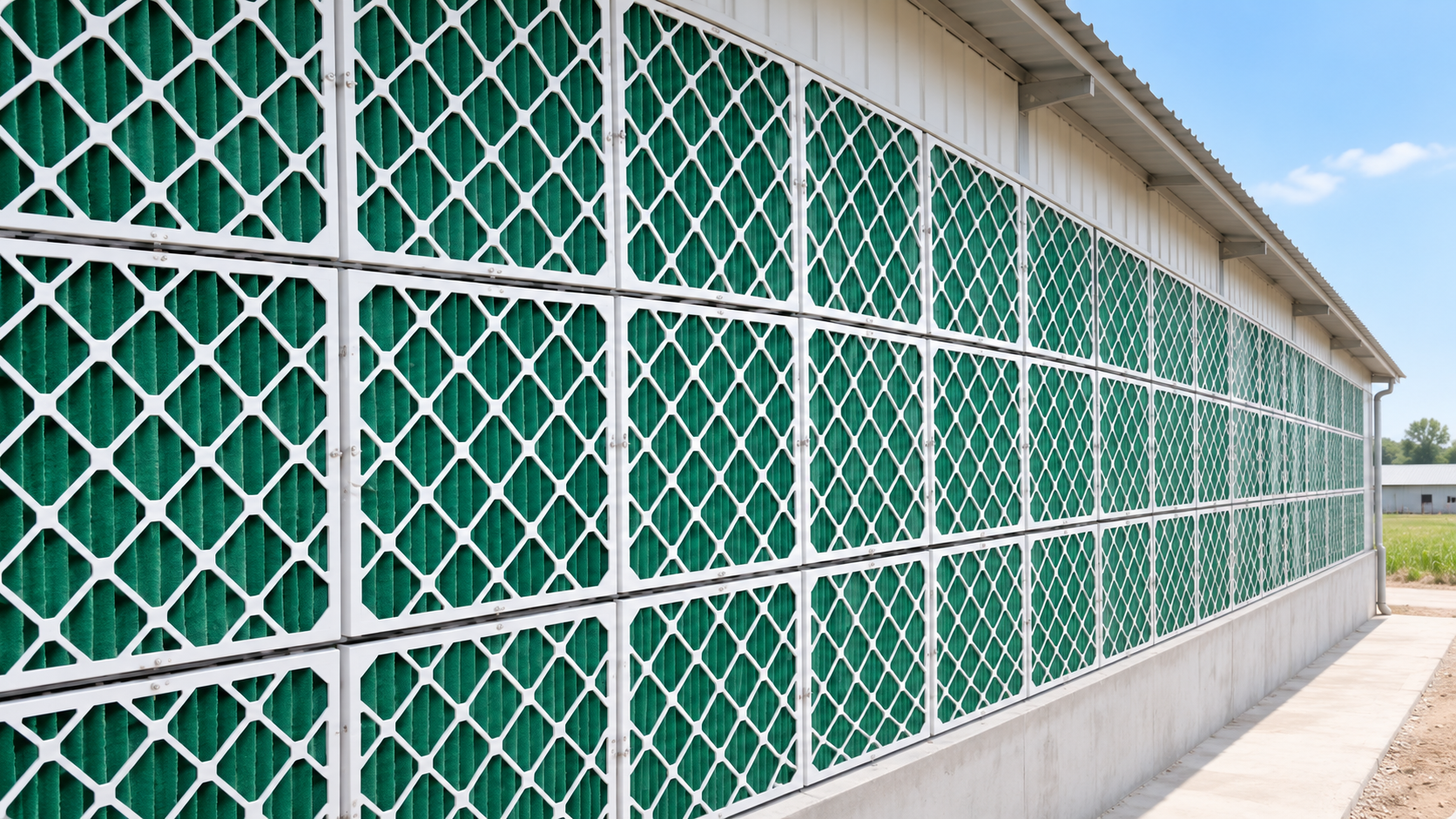
Optional filtration equipment for projects that require managed incoming-air quality. Filter grade, airflow resistance and maintenance plan should be matched to the application.
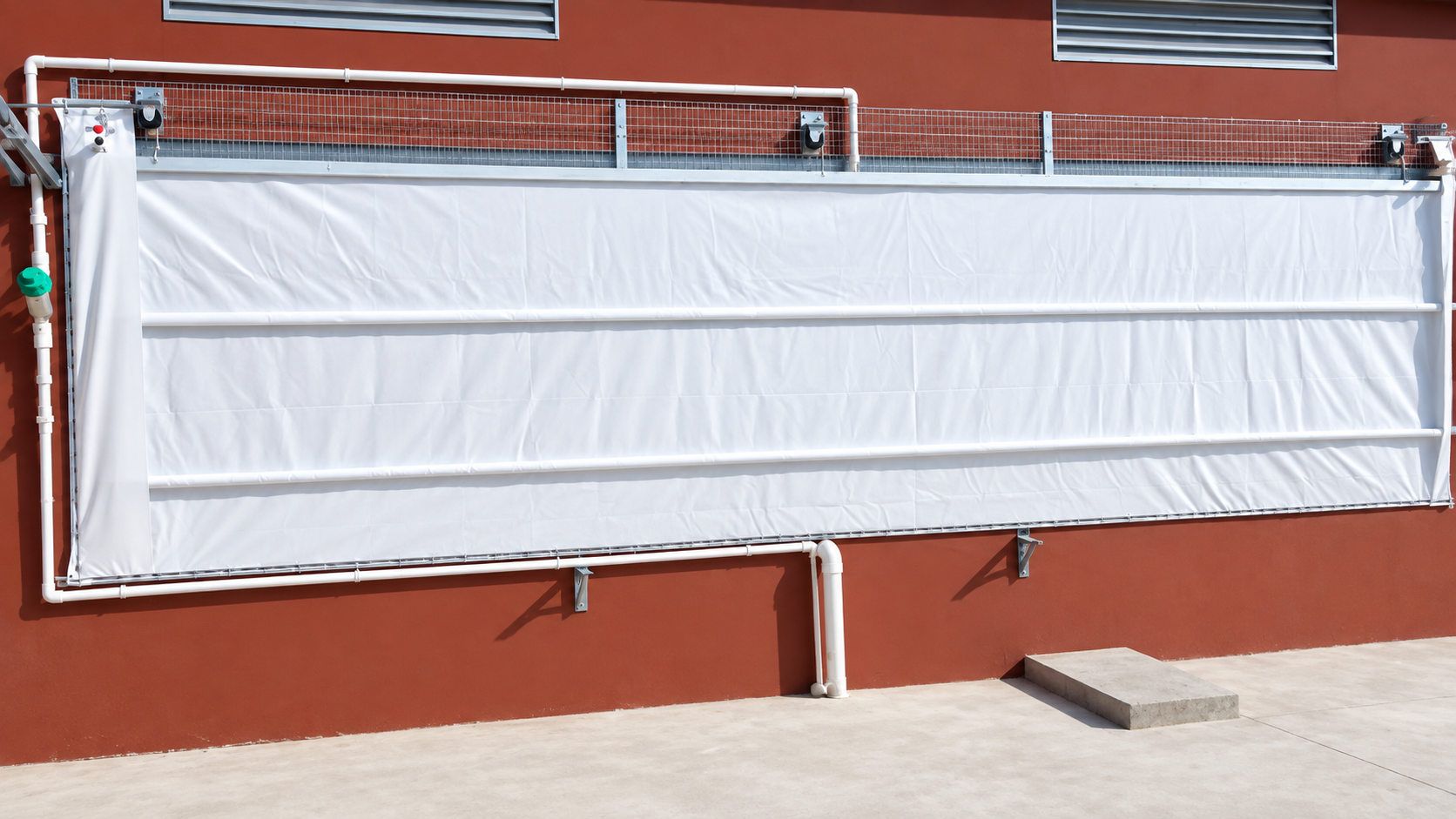
Ventilation Curtain System
Provides an adjustable side-opening solution for naturally ventilated or mixed-mode pig houses where larger air openings are required.
What the System Is Designed to Manage
Temperature Stability
Coordinates ventilation, cooling and heating equipment to help keep the barn within the selected operating range.
Ventilation & Fresh Air
Organizes air entry, movement and exhaust to support fresh-air exchange and reduce stagnant zones.
Humidity & Heat Stress Support
Cooling and airflow equipment can be used to support hot-weather management, while winter settings can reduce unnecessary heat loss.
Dust, Gas & Hygiene Management
Proper ventilation and optional filtration or air-treatment modules can help reduce the accumulation of dust, harmful gases and airborne contaminants.
Tell Us Your Pig House Conditions
Share the pig stage, barn dimensions, local climate, stocking plan and target ventilation mode. Our team can recommend a practical combination of fans, inlets, cooling, heating and supporting control modules.
Request Environment Control ProposalParameters Should Be Confirmed by Project
The supplied materials describe the system scope and equipment types, but do not provide one universal specification for every pig house. Final values should therefore be confirmed before quotation.
| System Scope | Environmental controller, ventilation fans, air inlets/louvers, cooling pads, heating equipment, air filtration and supporting curtain or air-treatment modules as required. |
|---|---|
| Applicable Pig Houses | Nursery, gestation, farrowing and finishing houses, subject to the selected environmental-control strategy. |
| Main Controlled Factors | Temperature, ventilation, humidity support and air-quality management. |
| Ventilation Mode | Negative-pressure, natural or mixed-mode solutions can be configured according to building design and climate conditions. |
| Cooling | Evaporative cooling-pad options can be included for suitable hot-weather applications. |
| Heating | Supplementary heating can be configured according to pig stage, climate and calculated heat demand. |
| Air Treatment | Filtration or exhaust-air treatment can be included where required by the project. |
| Final Data Needed | Barn length/width/height, pig stage, stocking density, local summer/winter climate, target temperature range, ventilation mode, electrical standard and installation conditions. |
Frequently Asked Questions
1. What does a pig farm environment control system include?
A project can include ventilation fans, air inlets, cooling pads, heating equipment, filtration, curtains and environmental-control components. The exact combination depends on the pig house and local climate.
2. Can one configuration be used for all pig production stages?
Not necessarily. Nursery pigs, sows and finishing pigs can have different temperature and airflow requirements, so the control strategy should be configured by production stage.
3. How is the required fan quantity determined?
It should be calculated from barn dimensions, stocking density, ventilation targets, pressure conditions and local climate rather than selected only by building area.
4. When is an evaporative cooling pad recommended?
Cooling pads are generally considered for hot-weather conditions where evaporative cooling is suitable. Their effectiveness also depends on local humidity and the matched ventilation system.
5. Can heating equipment be integrated with the ventilation system?
Yes. Heating can be included in the overall environmental-control plan, but the required heating capacity should be calculated from the barn and winter design conditions.
6. Can air filtration or odor-treatment equipment be added?
Yes. These can be optional modules for projects with specific biosecurity or exhaust-air treatment requirements. The final method should be selected according to the farm's actual operating conditions.